







Lebanese banks: deposits are falling further
Resident bank deposits fell by £2,710 billion over the week ended May 21, 2026. This contraction is mainly due to a decrease in foreign currency deposits equivalent to $45.5 million. The increase in book deposits is mainly based on overnight accounts, while savings are declining. The signal remains a concern for a banking system that has not regained the confidence of depositors.

Loss of war in Lebanon: bill explodes to $20 billion
The loss of war in Lebanon would already exceed $20 billion since 2024 and could reach $25 billion if hostilities continued. Over 61,000 dwellings were reported to have been totally or partially damaged between March and early May 2026. Reconstruction is expected to be all the more difficult as the state remains in default, the banking sector is not restructured and the international aid available remains limited to the extent of the needs.

Washington contradicts Israel on interceptions
CNN reports, citing an American official, that the United States did not intercept any Iranian missile during the night. The same source finds the Israeli claim that Washington was involved in the interception of ballistic missiles launched by Iran to Israel unfounded. This denial comes after a sequence of cross strikes between Israel and Iran, while the United States seeks to contain escalation and preserve a negotiating space.

Michel Issa in Baabda and Serail
The US Ambassador to Lebanon, Michel Issa, was received in Baabda by President Joseph Aoun and then in the Grand Serail by Prime Minister Nawaf Salam. He confirmed that negotiations should resume in Washington and that Donald Trump followed the Lebanese case daily. Nawaf Salam recalled, for his part, that no one was negotiating on behalf of Lebanon outside the Lebanese state.

Beaufort: Lebanon calls on Unesco to act
The Lebanese Ministry of Culture, by the Directorate General of Antiquities, calls for immediate intervention by the international community to protect the Beaufort Castle, or Qalaat al-Shaqif. The call responds to videos and maps broadcast by Israeli media, claiming that the site or its environment would house military infrastructure. Beirut rejects these accusations and insists on the heritage status of the monument, its public management since 2000 and its enhanced protection.

Israel: Europe tightens sanctions
Sanctions against Israel are at the centre of European diplomacy. France is preparing coordinated measures against individuals linked to settler violence in the West Bank, while Ireland, the Netherlands, Spain, Belgium and Slovenia are moving towards trade restrictions on settlements. The UK now appears ready to join a new E1 sequence. Ben-Gvir and Smotrich's comments on the West Bank and Lebanon could also push some of Israel's historical allies to support targeted sanctions.

The MEA faces the end of the monopoly
The end of the MEA monopoly marks a turning point for Lebanese aviation. Granted from the late 1960s and extended in 1992 and 2012, exclusivity protected the national company from crises and market risks. Its expiry can open the way for new Lebanese operators, at more competition and at more accessible prices. But without a strong regulator, transparency and fair access rules, opening up could create new rents instead of a modern market.
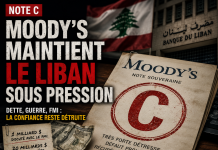
IMF, debt, war: Moody
Moodys keeps Lebanon under strong financial pressure. The Agency estimates that rapid IMF assistance of up to $1 billion would not change sovereign note C without debt restructuring or a comprehensive stabilization programme. War, the decline in tourism, massive displacement and the pressure on the balance of payments aggravate a crisis whose causes remain primarily institutional and political.

Trump returns Israel and Iran back to back
Donald Trump returned Israel and Iran back to back after a night of cross-strike, asking the two countries to stop firing immediately. Tehran announced the suspension of its last wave of attacks, while making this pause conditional upon the cessation of Israeli operations in Lebanon. The sequence also reveals an increasing tension between Washington and Tel Aviv, aggravated by electoral interests opposed to the United States and Israel.

Beirut municipality: suspicions grow
The municipality of Beirut is subject to an investigation by the Court of Auditors following revelations by Al Akhbar about employees with allegedly disproportionate assets. The newspaper quotes 15 properties, a transfer of $1 million followed by a purchase of real estate in Paris and $5 million in the account of an employee's minor son. The issue questions internal controls, political protections and the ability of financial justice to trace the entire chain of responsibilities.
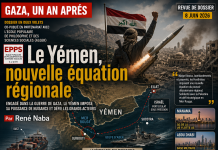
Yemen, an essential equation of regional decision-making power because of its commitment to the...
In this case, René Naba analyses Yemen as a decisive player in the Gaza war. Despite blockade, bombardment and poverty, the Houthists imposed a new regional equation, disrupted the Red Sea and challenged Western, Israeli and petromonarchic military arrangements around the global strategic routes of international maritime trade.

Press review: the strike on the southern suburbs wreaks havoc on the ceasefire and...
The Lebanese press review of 8 June 2026 shows a ceasefire weakened by the Israeli strike against the southern suburbs of Beirut. Between Washington, Tel Aviv, Tehran and Beirut, Lebanon is once again becoming a field of regional pressure, while the Lebanese army and civilians remain exposed to the risks of sustained escalation.

The South, a Lebanese History
Mona Makki defends the idea of a Lebanese South long shaped by tolerance, holidays, education and living together, before Hezbollah's ideological grip. It recalls the cultural identity of the Shiites of the South and denounces the progressive erasure of their libanity under organized and lasting Iranian influence today.
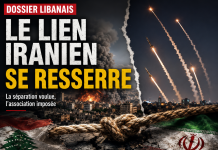
Lebanese case: Iranian link tightens
The United States, Israel and the Lebanese authorities are seeking to dissociate the Lebanese file from the Iranian file. However, recent events show a reverse dynamic. The Israeli strike on Dahiyeh led to an Iranian response, followed by Israeli strikes in Iran and Huthis fire from Yemen. Lebanon thus appears not as a secondary theatre, but as one of the focal points of the regional crisis.