

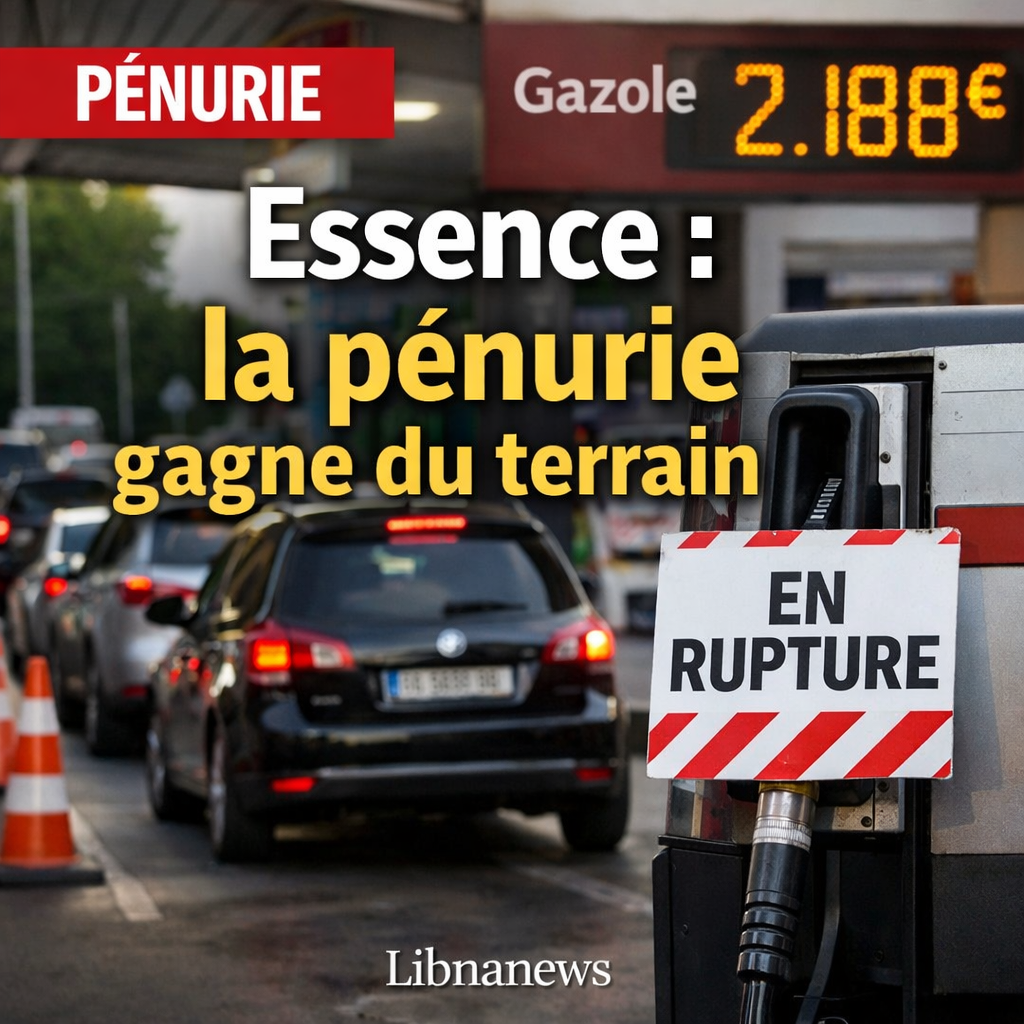
The energy crisis caused by disruptions in the Middle East is no longer only reflected in higher pump prices. In an increasing number of countries, governments are moving from support to restraint. Some are already rationing fuel, others are reducing the working week, limiting traffic or encouraging teleworking to curb consumption. In France, the executive branch ensures that there is no widespread shortage, but localized ruptures are increasing in service stations, while prices are reaching record levels. In Indonesia, the State is preparing purchasing restrictions and is now imposing a weekly remote working day on civil servants to save fuel.
The return of a word that many governments avoided
The term rationing had virtually disappeared from public debate in many economies for years. It now returns to the centre of public decision-making. Reuters reports that Sri Lanka has reduced the working week to four days and rationed fuel, while Myanmar already limits motorists to alternate days. Bangladesh, for its part, confirmed the rationing of fuel while urgently seeking new suppliers, including via a U.S. exemption request to import Russian diesel. In the Philippines, the seriousness of the situation led the authorities to declare a state of national energy emergency.
This shift is revealing. States no longer seek only to cushion the shock for consumers. They are trying to physically reduce demand. This means that the crisis is no longer seen as a mere temporary price surge, but as a problem of access to the product itself. In several Asian importing countries, the priority now is to preserve the volumes available for essential uses, such as public transport, logistics, agriculture or health services. Reuters also points out that China’s closure of refined fuel exports has further heightened regional tension, pushing several governments to urgently seek barter solutions, including with Japan or Russia.
In Indonesia, sobriety becomes a state policy
Indonesia is a good example of this new phase. The government first mentioned a one-day weekly telework plan for public officials. This has now become a more concrete measure. According to information published on 31 March, Jakarta announced restrictions on the purchase of fuel and provided a weekly day of remote work for civil servants to preserve energy stocks. Prior to this announcement, the coordinating minister for the economy, Airlangga Hartarto, had already explained that the scheme should be applied primarily to the public service, while the private sector would be encouraged to follow the same path.
The choice of telework is not an anecdotal. It marks a shift from energy policy to the daily organisation of work. The idea is simple: reduce home-office journeys to reduce demand for petrol and diesel without having to stop the activity. This type of response was mainly associated with the pandemic. It is now becoming an energy management tool. Reuters already pointed out that Indonesia had to announce restrictions in the days ahead, at a time when the presidency was stepping up diplomatic efforts to secure LPG and other supplies. The country is also seeking energy exchange agreements with Japan to ensure the most sensitive domestic needs.
Telework is also needed elsewhere in Asia
Indonesia is not an isolated case. On March 10, Reuters reported that Vietnam had formally asked companies to encourage remote work to reduce travel and save fuel. The country, heavily dependent on energy imports from the Middle East, saw the prices of gasoline, diesel and kerosene fly away in a few days. In Hanoi, long queues were observed in front of the gas stations. At the same time, the Vietnamese government has temporarily abolished certain import duties on fuels and has called on economic actors not to store or speculate.
This rapid diffusion of the same tools from one country to another speaks of the depth of the shock. Where rich states can still subsidize, cap or draw on their reserves, more exposed countries move faster to direct restrictions on usage. The reduction of face-to-face work, the shortening of the week or the limitations on purchasing are no longer presented as exceptional measures, but as ordinary stabilization instruments. This gives the current crisis a very different tone from that of simple oil inflation: one enters into a logic of rarity administration.
In France, no official rationing, but very real breaks
France is not at this stage in the administrative rationing of petrol. The government continues to hammer that there is no general short-term supply problem. At the end of March, Bercy further stated that 97% of service stations were operating normally, without breaking at least one fuel. The Ministry of Economy also increased meetings with distributors to try to contain prices and avoid speculative behaviour. Reuters reported, as early as 4 March, that a specific meeting had been organised with operators to prevent the increase paid by consumers from exceeding that of world markets.
But this reassuring communication comes up against a more visible reality on the ground. Since the beginning of March, several French media have reported queues, closed pumps and localized breaks, including on diesel. On 5 March, Parisien mentioned shortages in at least 5 per cent of gas stations, before tensions worsened at the end of the month. Other surveys published over the past few days indicate a multiplication of stations in difficulty of supply, with a particularly affected diesel. Even without a general breakdown of the system, the message is clear: France is no longer sheltered from point breaks that disrupt the daily lives of motorists and fuel a climate of nervousness.
The price also becomes a form of rationing
There are actually two types of rationing. The first is administrative: the State limits volumes, days of circulation or usage. The second is economic: the price becomes so high that it reduces consumption by itself. In France, it is this second mechanism that already acts strongly. On 30 March, Le Parisien with AFP reported that diesel had reached a historic weekly record of 2,1888 euros per litre. This continues to directly alter household behaviour, which reduces journeys, defers certain expenses or splits the full.
The boundary between logistical tension and price restraint is becoming increasingly blurred. When the litre exceeds psychological thresholds in a long time, access to fuel is theoretically free, but it ceases to be really normal for a part of the population. Testimony from drivers who limit their purchase to 20 or 30 euros due to lack of budget shows that a form of social rationing is already at work. The French government, for the moment, refuses massive and general support, citing the deteriorating state of public finances. Reuters points out that Paris favours targeted aid to certain sectors such as transport, agriculture or fisheries, rather than a large reduction in taxes or a general pump subsidy.
The answers vary, but the fear is the same
Not all governments react in the same way. Malaysia is increasing its subsidies massively to maintain fixed prices. Thailand seeks to cap diesel and discusses purchases of Russian crude. Argentina has chosen to expand the ethanol mixture in gasoline to reduce pressure on domestic prices. Portugal is preparing targeted support for diesel for certain key sectors. Conversely, more fragile countries, such as Bangladesh or Sri Lanka, have already had to take the step of explicit rationing.
In different forms, the same fear arises everywhere: that of not being able to guarantee both bearable prices and sufficient volumes. This double constraint explains why public policies become more intrusive. When the market is no longer sufficient to quickly rebalance supply and demand, the state returns to the forefront, not only to compensate, but to arbitrate. Who gets the fuel? At what cost? For what use? These questions, which seemed to belong to other epochs, became concrete again.
A global crisis that settles in everyday life
The most striking in this sequence is not only the magnitude of the oil shock. This is his very fast translation into ordinary life. A day of telework imposed on Indonesian officials, a week of four days in Sri Lanka, Burmese motorists limited to certain days, supervised purchases, queues in Hanoi, dry pumps in France: the energy crisis is no longer a market abstraction. It already affects work organisation, travel, household budgets and the mobility choices of millions of people.
In France, the situation remains less serious than in South or South-East Asia. But it shows that Europe is not protected by nature. As long as global flows remain disrupted, France can avoid official rationing while suffering record prices, logistical tensions and local disruptions. Indonesia, for its part, has already crossed an additional threshold by transforming fuel economy into administrative delivery. In between, there is a common global trajectory: the gradual shift from a price shock to a usual crisis.






