




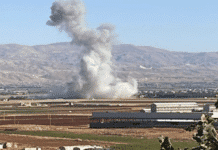
Update on the situation in Lebanon at 6 p.m.: Shelling continues and humanitarian situation...
The humanitarian situation in Lebanon is deteriorating rapidly.
The UN High Commissioner for Refugees has described the crisis in Lebanon as "biting", as medical infrastructure and health centres continue to be targeted.
Several hospitals have been hit by Israeli raids, making it difficult to treat the wounded.
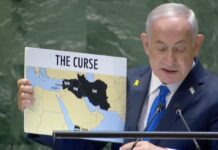
Netanyahu’s Strategy and the Logic of the Conflict in Gaza, Lebanon and Iran: Between...
The current conflict in the Middle East is not simply a consequence of regional tensions, but the result of a policy long matured by figures such as Benjamin Netanyahu.
Behind every decision of the Israeli prime minister, one perceives a complex strategy, shaped by a very precise ideological vision of the world and the Middle East.
Tracing Netanyahu's political trajectory, it is clear that this war and its stakes are not the result of chance, but rather the realization of a vision defined from his diplomatic beginnings.
The close ties between Netanyahu, AIPAC, American Republicans, and neoconservatives have helped shape a strategy hinged around confrontation with Iran, the invisibilization of the Palestinians, and the establishment of a new regional order.

Press review for October 5: Lebanon in the grip of an unprecedented military escalation
Israeli efforts were met with strong resistance, with Hezbollah preparing ambushes that caused significant casualties among Israel's elite units.
Hizbullah intensified its attacks by targeting Merkava tanks and Israeli infantry forces with rockets and explosives placed along their advance.
Al Akhbar said the clashes had caused more than 60 Israeli casualties in just a few days.
Update in Lebanon at 9 a.m.: Intensification of Israeli bombing and political repercussions
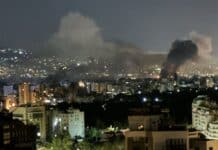
Last night was particularly marked by a new wave of Israeli bombing on the southern suburbs of Beirut.
According to the Lebanese authorities, these strikes caused the death of several civilians, while dozens of others were injured.
A residential building was totally destroyed in Burj al-Barajneh, raising fears that the death toll could rise as rescue teams work to find possible survivors under the rubble.
Iran/Israel: Tooth for tooth, eye for eye to mutual death?
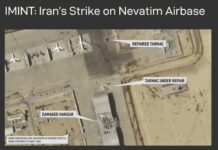
According to military experts, the attack was not simply intended to test Israel's defenses, but to send a far more consequential signal: the Dimona nuclear power plant, located as Israel's primary air base in the defense of the Jewish state.
It is a symbol of Israel's nuclear potential, and could be a potential target in the event of Israeli retaliation.
Le nombre de morts au Liban dépasse les 2 000 morts près d’un an...
Selon le gouvernement libanais, le bilan des victimes au Liban a dépassé les 2 000 morts, atteignant précisément 2 011, après près d'une année de combats...
Lebanon’s death toll surpasses 2,000 nearly a year of cross-border fighting
According to the Lebanese government, the death toll in Lebanon has surpassed 2,000, reaching precisely 2,011, after nearly a year of cross-border fighting with...
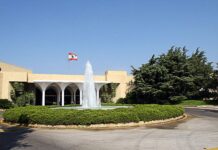
Lebanon’s Presidential Election: A Political Opportunity in the Face of Hezbollah’s Weakening (Axios)
Hezbollah leader Hassan Nasrallah, as well as several senior commanders, were killed in Israeli strikes, dealing a heavy blow to the organisation. According to Israeli and US sources quoted by Axios, the strikes would have significantly weakened Hezbollah's command structure, leaving it in a more vulnerable position than it has been in years.
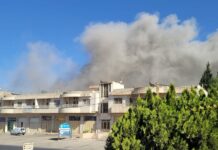
Update on the situation at 6 p.m.: bombings, targeted strikes, and humanitarian aid in...
Israel, using its air force, drones and artillery, has struck civilian and military targets throughout southern Lebanon, reaching the southern suburbs of Beirut, a Hezbollah stronghold.
The strikes targeted residential buildings, hospitals and critical infrastructure, such as main roads and supply lines.
Among the notable targets, the alleged Hezbollah command center in Dahiyeh, in the southern suburbs of Beirut, was heavily bombed.

Le Liban reçoit une aide médicale d’urgence au milieu de l’escalade du conflit
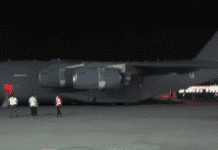
Ce vendredi, le ministre libanais de la Santé publique par intérim, Dr. Firas Al-Abyad, a accueilli à l'aéroport international de Beyrouth une importante cargaison...

Appel urgent aux députés de la nation et aux responsables pour arrêter la guerre...
Le président du rassemblement des dirigeants et chefs d'entreprises RDCL, Nicolas Boukather, a exprimé sa profonde inquiétude quant aux conséquences irréversibles de la guerre en cours sur le secteur privé légitime au Liban. Il a révélé l'angoisse profonde du secteur privé face à cette guerre, soulignant les défis immenses auxquels il est confronté. Il a expliqué que tant que les ports et l'aéroport fonctionnent encore, la chaîne d'approvisionnement perdure, mais le danger reste réel et imminent. Les routes logistiques à travers la Syrie sont impraticables en raison des sanctions imposées par la loi César. Ainsi, le secteur privé juge urgent et existentiel que la guerre cesse immédiatement.
Le Hezbollah intensifie ses attaques avec de nouveaux missiles Fadi 4 sur Tel Aviv...
Dans un communiqué, le Hezbollah a déclaré avoir "lancé des salves de roquettes Fadi 4 sur la base de Glilot de l'unité 8200 du renseignement militaire et le quartier général du Mossad situé en périphérie de Tel Aviv". Cette attaque, selon le groupe, est un hommage à l'ancien chef du Hezbollah, Sayyed Hassan Nasrallah, et constitue une réponse aux "massacres" commis par Israël et au ciblage des civils.
Press Release Issued by the Lebanese Business Leaders’ Association (RDCL)
The Lebanese Business Leaders' Association (RDCL) expresses its deep concern regarding the ongoing war, a danger that it had previously warned of in earlier...

Revue de presse du 29 septembre: Les réactions à l’assassinat de Nasrallah se poursuivent
Sur le plan international, l'assassinat de Hassan Nasrallah a suscité de vives réactions dans le monde entier. Le président américain Joe Biden a salué cette opération comme un coup majeur porté au Hezbollah et à l'Iran, tout en soulignant que les États-Unis chercheraient à prévenir une escalade plus large. Dans un communiqué relayé par The Washington Post, Biden a souligné que les États-Unis continueraient de soutenir Israël tout en œuvrant pour une désescalade par des moyens diplomatiques. Cependant, les élections américaines à venir compliquent cette stratégie, d'autant plus que l'administration Biden craint que toute intensification du conflit ne détourne l'attention de la campagne électorale et ne nuise à l'image des démocrates.