





Since the beginning of the military escalation in October 2023, the war between Israel and Lebanon has not been played out solely on the terrain of armed confrontations. It now extends to a psychological battle where fear, disinformation and direct terror tactics aim to fracture Lebanese society, particularly in the southern suburbs of Beirut. This psychological warfare uses several levers: night bombings, direct telephone threats, the spread of false information via social networks, and the systematic announcement of the places to be bombed by IDF spokesmen. These actions are designed to destabilize the civilian population and provoke sedition, thus weakening national cohesion.
The terror of night bombings
For decades, the southern suburbs of Beirut, a Hezbollah stronghold, have been a prime target of Israeli strikes. However, since October 2023, these strikes have taken on a new dimension, with intensive shelling carried out almost exclusively at night. These nighttime attacks are not only aimed at military objectives, but seek to exploit the heightened fear that civilians feel when they are plunged into darkness.
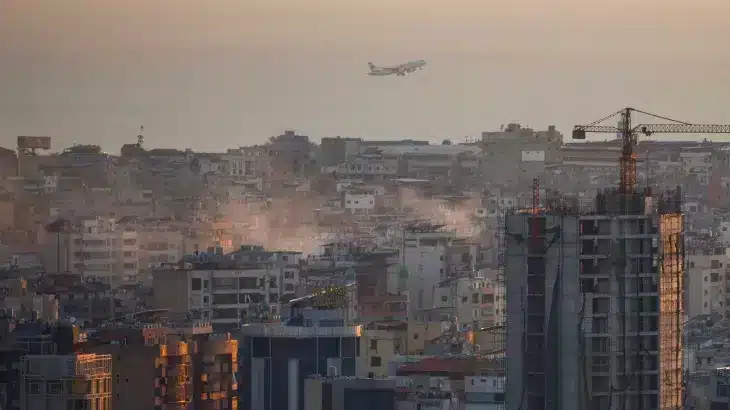
The psychological impact of these strikes is enormous. All of Beirut feels and hears the bombings. The explosions resonate throughout the city, including in the remote neighborhoods of Dahiyeh, such as Achrafieh or Hamra. Flashes of light illuminate the sky of Beirut and are visible from several points in the capital, while explosions shake buildings. On the night of October 18, 2023, massive airstrikes targeted Hezbollah positions in Dahiyeh. The explosions were visible and audible throughout the city, with shock waves felt as far away as Jounieh, more than 20 kilometers to the north.
Comparez rapidement les prix des vols avec Fly2Leb.
These attacks, which cause scenes of panic, disrupt daily life. « On nights when there are strikes, I can’t sleep, » says Hadi, a resident of Hamra. « I feel the vibrations in the walls of my apartment, and even though I know the strikes are far away, I can’t help but think that it can happen here. » This sense of vulnerability affects not only the neighbourhoods close to the bombed areas, but the whole of Beirut, where families often take refuge in makeshift shelters or evacuate temporarily.
The strategy behind these night bombings is clear: to create a climate of collective terror. Psychologist Dr. Judith Herman, who specializes in war trauma, points out that « nighttime airstrikes plunge civilians into constant anguish, where the unpredictability of attacks and the inability to see what is happening amplify the trauma. » The repetition of strikes each night, coupled with images of explosions, creates an environment where fear becomes pervasive.
Announcements of bombings by the IDF: a terror foretold
Every evening, IDF (Israel Defense Forces) spokesmen publicly announce the locations that will be bombed in the coming hours, claiming to be acting under the pretext of protecting civilian lives. The messages, broadcast via social media, television and radio, urge civilians to leave their homes before the strikes arrive. These evacuation orders now concern nearly a million people who find themselves in moral and psychological distress, forced to leave their homes without knowing if they will be able to return. These families, displaced from their homes, live in total uncertainty about their future, with the fear that their homes will be destroyed before they return.
The IDF’s instructions to evacuate the targeted areas created an immediate sense of panic among residents, who were forced to flee without knowing whether they would be able to return or find their homes intact. In fact, these announcements of bombings create a climate of permanent psychological terror, where each evening becomes an unbearable waiting game for the families, not knowing if they will be the next to have to flee or to be hit.
These practices are also controversial under international conventions on human rights and the rules of war. International humanitarian law, including the Geneva Conventions, prohibits the use of terror as a method of warfare, and imposes strict limits on how military operations must protect civilians. The announcement of massive bombings and calls for evacuation, although presented as attempts to minimize civilian casualties, contribute to the creation of an environment of fear, which violates the principle of distinction between civilians and combatants and raises ethical questions about the use of these tactics. The International Committee of the Red Cross (ICRC) stresses that these practices may constitute violations of international humanitarian law, which protects civilians from intimidation and indiscriminate attacks.
Telephone threats: a direct weapon against civilians
In parallel with the bombings, another form of terror has intensified since the beginning of the conflict: direct telephone threats. These calls, often anonymous, are reported by many residents of the southern suburbs of Beirut, but also of southern Lebanon. People who receive these calls are often warned that their homes will be bombed if they continue to support or shelter Hezbollah members.
A particularly striking case occurred on October 17, 2023. Residents of Dahiyeh reported receiving threatening calls telling them that their neighborhood would be « next » on the list of Israeli targets. These calls, while often vague, have a devastating psychological impact. Residents find themselves in a constant state of terror, fearing that their home will be the next to be hit.
These phone threats are not new in this type of conflict, but their increased use shows how psychological warfare is an integral part of Israeli strategy. According to crisis communications analyst Dr. Peter Neumann, « these calls are designed to fragment civil society, sow doubt, and encourage the dissociation between civilian populations and armed groups like Hezbollah. » By forcing residents to choose between their safety and loyalty, Israel seeks to weaken support for Hezbollah and cause internal fractures.
Disinformation: a powerful tool for manipulation
In addition to strikes and direct threats, disinformation plays a major role in this conflict. Social media is flooded with misinformation, often intended to amplify fear and sow confusion. A concrete example occurred on October 6, 2023, when Eddy Cohen, a well-known Israeli commentator, shared on X (formerly Twitter) a photo supposedly taken in a Hezbollah tunnel. This image, which was supposed to prove the presence of an underground Hezbollah network under Beirut, turned out to be a photo from 2019, taken across the border in Israel. Yet this post was quickly shared thousands of times, reinforcing the idea that Hezbollah is hiding under every Lebanese neighborhood.
This type of misinformation, often based on out-of-context images or unfounded rumors, aims to fuel paranoia. By sowing confusion among civilians, Israel seeks to exacerbate internal tensions and weaken public confidence in local institutions and media.
Disinformation experts, such as Professor Garth Jowett, point out that « disinformation in conflict situations is particularly dangerous, as it plays on primal emotions like fear and anxiety, reducing people’s ability to rationally analyse events ». The spread of fake news, amplified by social networks, fuels a climate of uncertainty where it becomes difficult to discern the truth.
The impact on the Lebanese population and beyond
The cumulative effect of these different tactics – nightly bombings, announcements of strikes, telephone threats and disinformation – is a profound psychological wear and tear for the people of Beirut and southern Lebanon. Psychological warfare is not just about destroying buildings, it is about breaking the moral and mental resilience of civilians. Entire families live in constant fear, fearing for their safety and that of their loved ones.
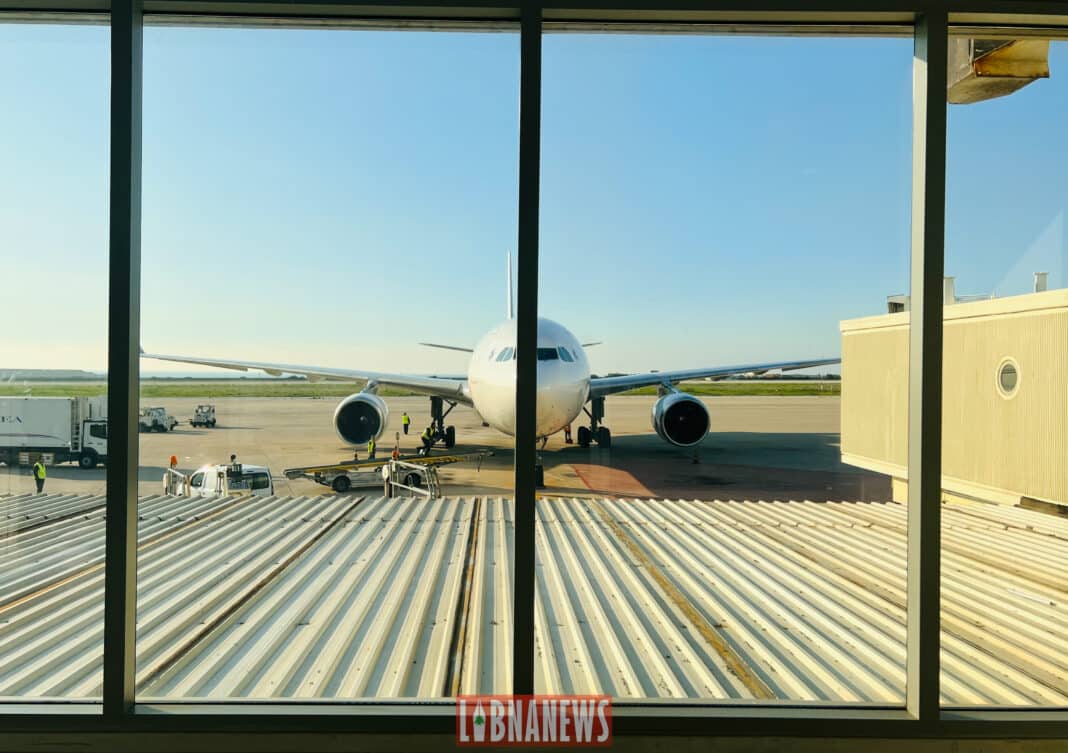
Even leaving becomes a hard decision to make because of the risks of going to Beirut International Airport.
Repeated attacks disrupt daily life: schools close, roads are deserted at night, and hospitals are bracing for a continued escalation of the wounded. The population finds itself trapped in a war where terror is as powerful a weapon as bombs. Many families have already left their homes, fearing for their lives, while others live in complete uncertainty, not knowing if they will ever be able to return home.
But the impact of this psychological warfare does not stop at Lebanon’s borders. Relatives living abroad or members of the Lebanese diaspora are also affected, as they are constantly worried about the safety of their families back home. They follow the news in real time, with each report of bombing or evacuation causing a wave of anguish among those living in Europe, America, or other parts of the world. Frequent calls to families in Lebanon reveal situations of intense emotional stress on both sides, with loved ones trying to reassure, but themselves plagued by ever-growing anxiety.
The anxiety of those who live far away is often amplified by the lack of direct control over the situation. Unlike those who are on the ground and who can react according to the circumstances, Lebanese living abroad have only fragmented information about the real situation of their loved ones. This moral distress is fuelled by images of explosions, accounts of strikes and the daily uncertainty faced by their families.
Thus, the psychological warfare unleashed by bombings, telephone threats and disinformation goes far beyond Lebanon’s borders, deeply affecting the diaspora and amplifying the sense of hopelessness among those abroad. This collective trauma affects an entire community, and each further escalation of the conflict increases the fear and suffering of Lebanese people around the world.