






Local news
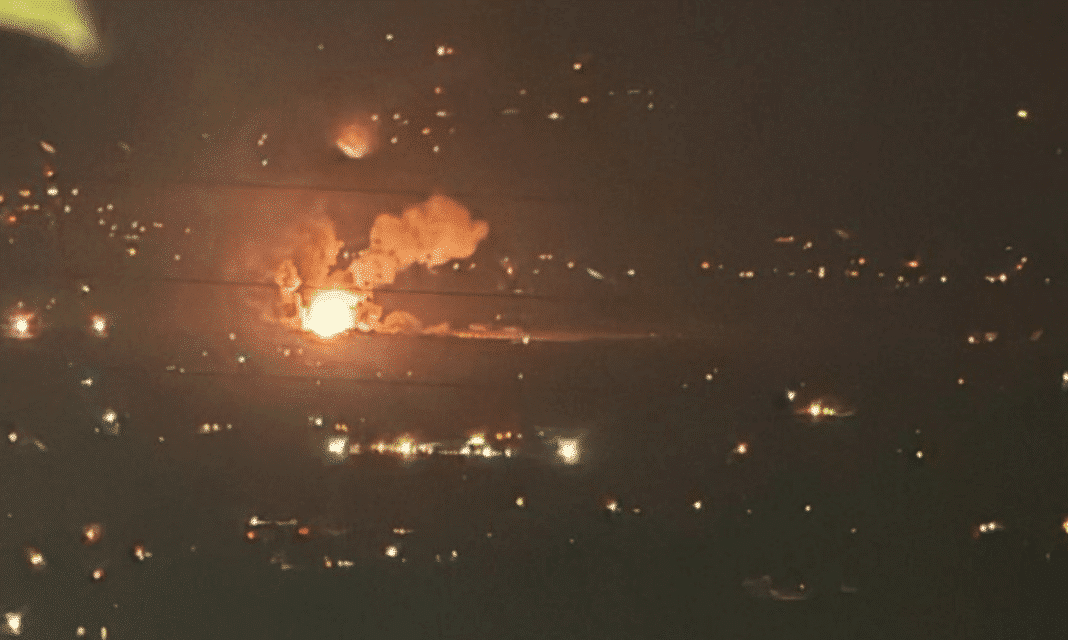
Lebanon continues to suffer the direct consequences of the intensification of fighting in the south of the country, pitting Hezbollah against the Israeli army. According to Al Sharq Al-Awsat, the IDF has expanded its military operations by opening a new front in the western sector of southern Lebanon, after a week of unsuccessful clashes in the eastern and central sectors. These operations are aimed at controlling strategic heights near villages such as Maroun el-Ras and Yaron, positions that allow Hezbollah to monitor and target Israeli movements across the border. However, despite the heavy airstrikes and shelling, the IDF has failed to make any significant inroads in these areas, which are described as « military zones » by local sources. These areas are almost completely depopulated due to the massive displacement of civilians, illustrating the gravity of the humanitarian situation in the south.
An-Nahar reports that Israeli attempts to advance on the ground remain limited to the border area, with sporadic incursions and airstrikes aimed at weakening Hezbollah’s defense lines. The towns of Maroun el-Ras and Blida witnessed fierce fighting, but Israeli attempts to break through the front lines ended with « limited success », according to Lebanese security sources. Despite the incessant strikes, the Israeli army is struggling to secure lasting territorial gains, a fact confirmed by the difficulty for its tanks to advance in these rugged regions.
Hezbollah, through its deputy secretary general, Sheikh Naim Kassem, said that the resistance forces remain in control of the strategic heights. Al-Anba points to Kassem’s remarks that Hezbollah’s positions are « excellent, » and that the organization remains capable of targeting Israeli movements thanks to its mastery of the heights overlooking the Israeli border areas. This geographical dominance allows Hezbollah to maintain pressure on Israeli forces and prevent their advance.
Retrouvez les dernieres depeches et mises a jour en direct sur Libnanews Live.
The situation in the southern suburbs of Beirut and in other regions of the country, such as the Bekaa, only aggravates the crisis. Al-Akhbar reports massive Israeli raids on the southern suburbs, described as « indiscriminately targeting civilians, » echoing similar strikes in previous wars between Hezbollah and Israel. The human toll is tragic: the resistance has lost many fighters and civilians continue to pay a heavy price with massive destruction of their homes and infrastructure.
On the political level, the deadlock persists. The daily Al-Anba notes that, although Hezbollah has reaffirmed its support for Nabih Berri’s mediation to obtain a ceasefire, no significant diplomatic progress has been made. Berri’s attempts to bring together local political actors for a unified solution have not yet materialized, in a context where the presidential election remains on hold. Teymour Jumblatt, in an op-ed published by L’Orient Today, called on Lebanese factions to « unite to elect a consensual president », and to relaunch the implementation of UN Security Council Resolution 1701 to prevent Lebanon from being dragged into a proxy war.
Regional news
At the regional level, the conflict in southern Lebanon is taking on a magnitude that goes far beyond Lebanon’s borders, with profound implications for the stability of the Middle East. According to Al-Binaa, Saudi Arabia and the United States are stepping up their efforts to contain the crisis. Saudi Defense Minister Khaled bin Salman and his U.S. counterpart Lloyd Austin held talks to discuss ways to reduce the escalation and prevent the conflict from spreading to other countries in the region. Saudi authorities are concerned about the possibility of an attack on their oil infrastructure, a fear shared by several Gulf countries.
Iran, for its part, has reaffirmed its support for Hezbollah. The daily Al-Akhbar reports statements by Iranian officials who say that the Islamic Republic is ready to defend its allies in Lebanon and Palestine. However, they also insist on the need for a regional political solution, including the recognition of Palestinian rights. This position reinforces the sense that Lebanon has become a ground of indirect confrontation between Iran and Israel, each seeking to protect its strategic interests in the region.
In addition, the Gulf countries have responded to Lebanon’s appeal for humanitarian assistance. According to Al-Nahar, the UAE and Qatar have already started sending aid in the form of medicines and medical supplies to Beirut. This assistance is essential, given that many hospitals in southern Lebanon are running out of resources due to Israeli attacks. Nevertheless, the situation remains critical, with a lack of international coordination for a more comprehensive humanitarian response.
Egypt’s position is also noteworthy. The Egyptian government has urged all parties to respect Lebanon’s sovereignty and end hostilities. According to Al-Sharq Al-Awsat, Egypt called for an emergency meeting of the Arab League to discuss ways to stop the conflict. However, as an Egyptian official pointed out in the same newspaper, the complexity of relations between the various regional actors, including international powers, makes the search for a diplomatic solution extremely difficult.
International news
At the international level, the situation in Lebanon is attracting the growing attention of world powers. United Nations Secretary-General António Guterres, quoted by L’Orient-Le Jour, expressed his concerns about an « uncontrolled extension of the war » and reiterated his call for an immediate ceasefire. Guterres stressed the importance of complying with Security Council Resolution 1701, which calls for the cessation of hostilities and the deployment of Lebanese forces and UNIFIL (United Nations Interim Force in Lebanon) in southern Lebanon. However, despite these calls, little progress has been made in reaching a peace agreement.
The European Union’s foreign policy chief, Josep Borrell, also echoed this growing concern. In a speech to the European Parliament, reported by La Croix, Borrell stressed that the situation in Lebanon was becoming increasingly critical, with tens of thousands internally displaced due to the fighting. According to him, about 20% of the Lebanese population has been forced to flee conflict zones, particularly in the south. He called for an urgent humanitarian response to help the displaced, while reiterating his support for a political solution that would respect Lebanon’s territorial integrity.
In the United States, Joe Biden’s administration is taking a cautious approach. As Axios reports, the White House has been skeptical of Israel’s long-term goals in Lebanon. Although Washington continues to support Israel in its fight against Hezbollah, US officials are expressing doubts about the viability of Israeli military operations and their ability to end the conflict. Discussions are underway to avoid a wider escalation, but the differences between Washington and Tel Aviv appear to be widening.
French President Emmanuel Macron, meanwhile, announced his intention to convene an international conference on Lebanon to coordinate emergency humanitarian aid. According to La Croix, Macron hopes to mobilize the international community to provide financial support to the Lebanese authorities, who are struggling to manage the massive influx of displaced people and the collapse of infrastructure due to the conflict. However, the French initiative faces obstacles, not least because of the reluctance of some countries to engage without political guarantees of long-term stability in Lebanon.
Finally, Israel continues to wage a communication war in parallel with military operations. The Israeli daily Haaretz, quoted by Al-Anba, reports that Israeli Prime Minister Benjamin Netanyahu claimed that the Israeli strikes had « significantly weakened Hezbollah ». He even claimed that the elimination of senior Hezbollah leaders, including Hassan Nasrallah, would weaken the organization in the long term. However, as Al-Binaa notes, Netanyahu’s statements have not been confirmed by other sources, and Israeli officials remain cautious about the real impact of these attacks.