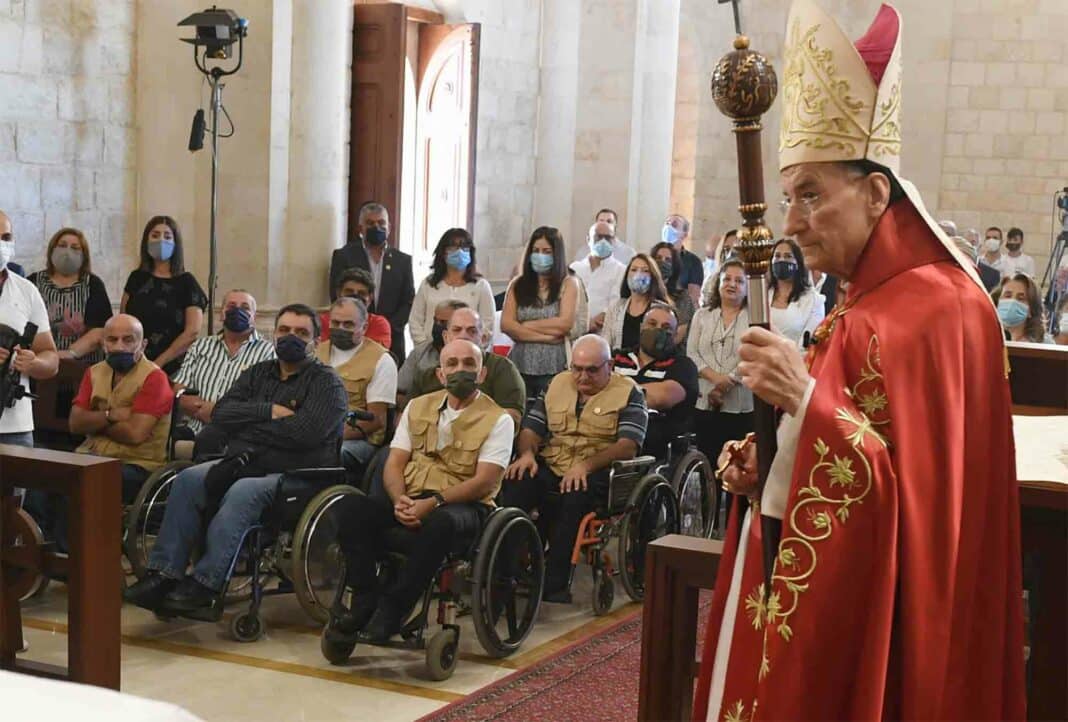






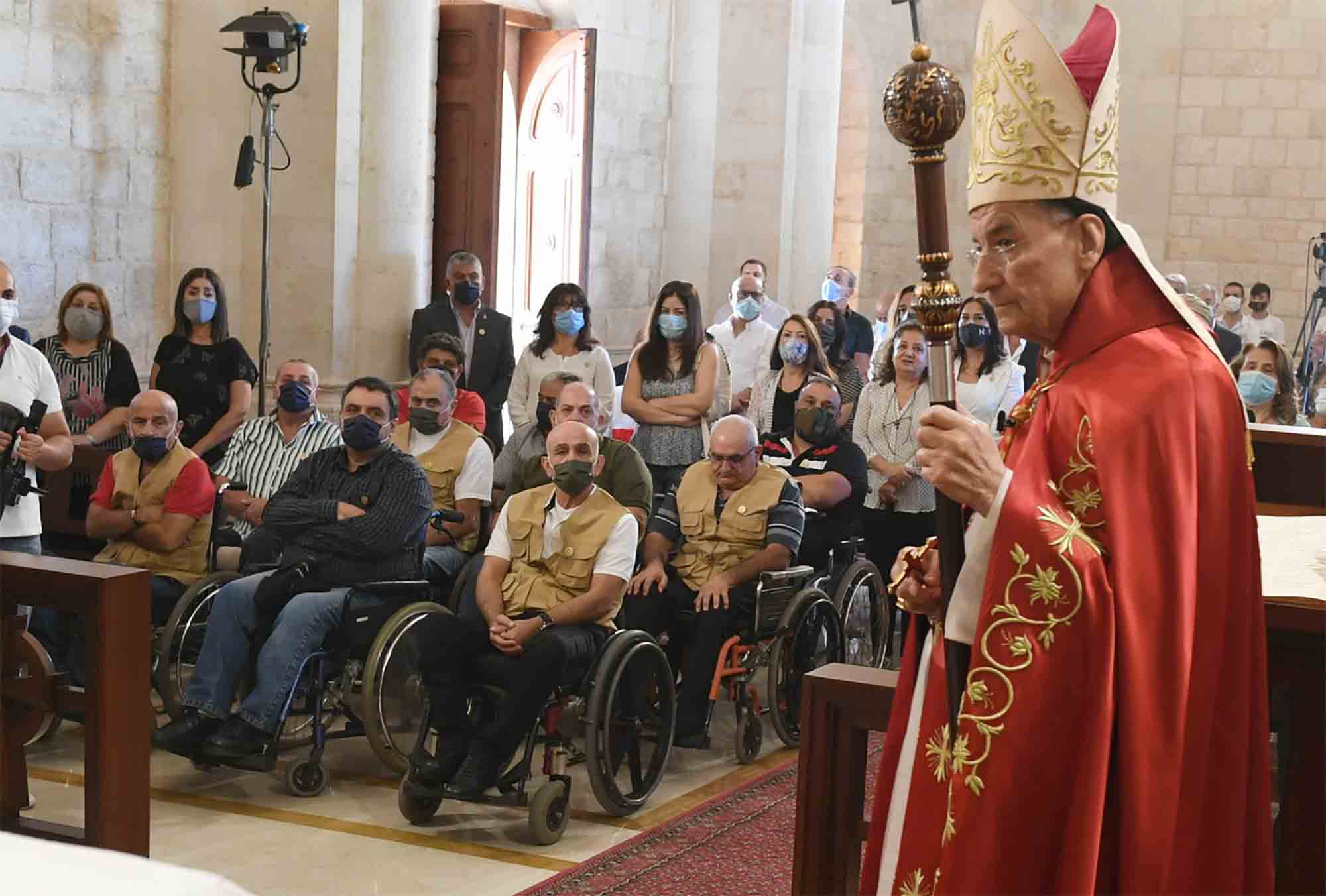
On this Pentecost Sunday, the Maronite Patriarch Béchara Raï called in his homily the Prime Minister designate Saad Hariri to present to the President of the Republic Michel Aoun an updated proposal with a view to forming a government while the process has been blocked for seven months.
The day after the parliamentary session during which, in response to the letter from the President of the Republic, the deputies asked the Prime Minister-designate to form the government “quickly” “in agreement” with Michel Aoun, the Maronite patriarch concentrated his criticism on Saad Hariri.
Patriarch Raï indeed called « the Prime Minister-designate to take the initiative, yes to take the initiative, to present an updated version to the President of the Republic as quickly as possible, and to agree with him on the structure, portfolios and names, based on a government of non-partisan experts not dominated by any party ”.
Retrouvez les dernieres depeches et mises a jour en direct sur Libnanews Live.
He even implied that in case of failure Saad Hariri would have to recuse himself: « If they cannot come to an agreement, let them draw the consequences and adopt a courageous position which would allow a new training process. «
In addition, the head of the Maronite Church said he was sorry for the clashes that took place on the Nahr el-Kalb highway and in Achrafieh between supporters of the Lebanese Forces (FL) party and pro Syrian refugees. -Bachar al-Assad who went to the polls at the Syrian embassy in Yarzé (34,000 Syrian refugees in Lebanon took part in the Syrian presidential elections organized by the regime of Bashar al-Assad, himself a candidate for his re-election). These clashes, he said, « were caused by provocations against the feelings of the Lebanese in a region which has seen many martyrs during the fighting against the Syrian army ».
The day after these clashes, in Tripoli, strangers tried to set fire to an office of the Kataëb party and a clinic belonging to the FL party. Israeli and FL flags were burned.
The patriarch recalled that the Syrian refugees were welcomed in Lebanon with generosity and, like several Christian parties (such as the CPL or Courant patriotique libre, the FL party and the Kataëb party), considered that their return in Syria “cannot wait for a political solution”. He called on the Lebanese state to “take operational measures to ensure a safe and rapid return to Syria of Syrian refugees”. This implies that, like the President of the Republic and the CPL (founded by Michel Aoun), he is in favor of direct negotiations between the Lebanese authorities and the regime of Bashar al-Assad.
In recent months, Mgr Raï had called for the adoption of an active neutrality recognized by the United Nations (a proposal well received by the Lebanese with the exception of Hezbollah*), for the organization of an international conference to end the crisis. political impasse, the establishment of a civil state and the disarmament of Hezbollah and the Palestinian organizations but, pushed by his advisor the former minister Séjean Azzi (ex-Kataëb) and by the former deputy Fares Souhaid (ally of the party Kataëb during the last legislative elections), he had also taken a position in favor of Saad Hariri and the governor of the Bank of Lebanon (BDL) Riad Salamé against Michel Aoun which had earned him criticism from supporters of the President of the Republic but also of those who are opposed to the « party of the Banks ».
Recall that this « party » brings together the Speaker of Parliament Nabih Berri (leader of the Amal movement) of which the resigning Minister of Finance Ghazi Wazni was the advisor, its vice-president Élie Ferzli (shareholder of IBL or Intercontinental Bank of Lebanon), the Club of former Prime Ministers to which belong Najib Mikati, Fouad Siniora, Tammam Salam and Prime Minister designate Saad Hariri (shareholder of Bankmed and leader of the Current of the Future), the Parliamentary Budget and Finance Committee and in particular its president Ibrahim Kanaan (member of the CPL but rallied to the « party of the Banks » to satisfy its presidential ambitions), its rapporteur Nicolas Nahas (member of the Azem movement of Najib Mikati and also close to the Progressive Socialist Party of Walid Joumblatt whose friend Marwan Hamadé who resigned from his deputy is a member of the board of directors of Crédit Libanais headed by Joseph Torbey, former president of the ABL or Association des B anques du Liban) and members like Anwar el-Khalil (member of Nabih Berri’s Amal movement and member of the board of directors of Bank of Beirut, the bank headed by ABL president Selim Sfeir).
* The Khomeinist ideology of Hezbollah, grounded in the principle of vilayat-e faqih, manifests in Lebanon through the retention of weapons outside the legitimate monopoly of the state and the army, while hollowing out the Mar Mikhael Agreement with the Free Patriotic Movement, which it respects neither in spirit nor in practice.