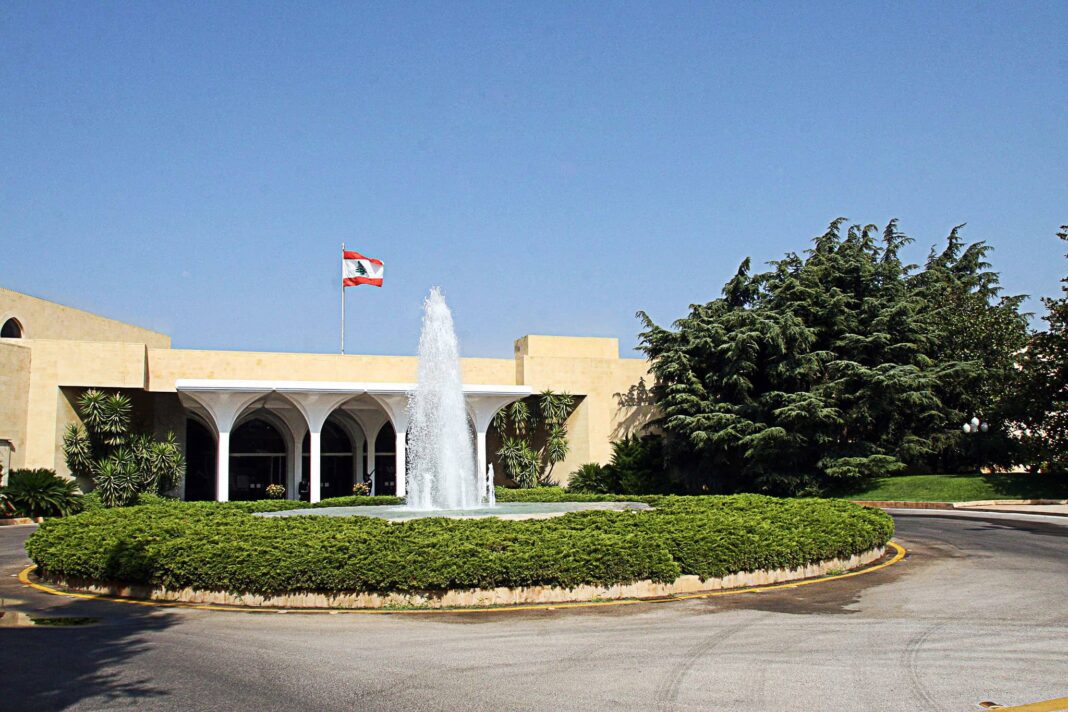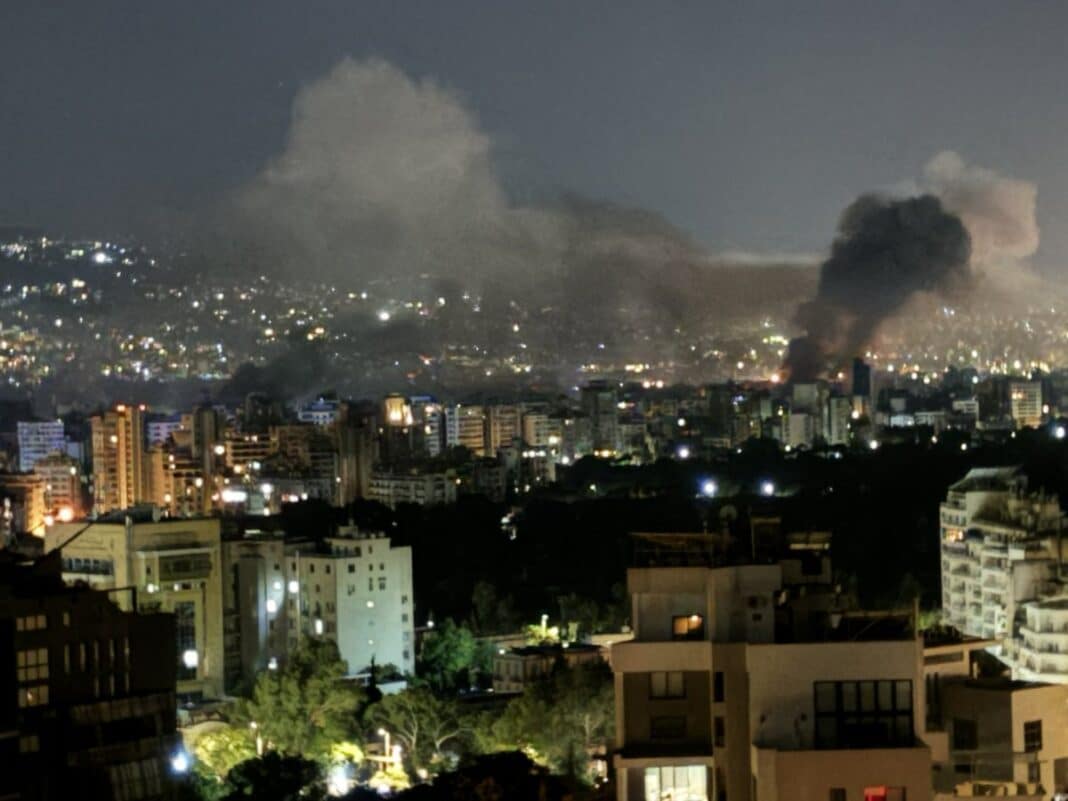






Lebanon is going through a period of unprecedented political and economic turbulence, exacerbated by the absence of a president for more than two years. This presidential vacancy, combined with a devastating economic crisis, has plunged the country into institutional chaos that threatens regional stability. Yet recent events, such as the weakening of Hezbollah following targeted Israeli strikes, have opened a window of opportunity for international powers, including the United States and France, to push for the election of a president not aligned with the Shiite militia.
The blockage of the Lebanese presidency
Since the end of Michel Aoun’s term in October 2022, Lebanon has been without a president. This deadlock is the result of an inability of the different political blocs to agree on a consensus candidate. Hezbollah, which wields considerable influence on the Lebanese political scene, has long blocked the election of any candidate who does not share its views or is not aligned with its allies, including Suleiman Frangieh, leader of the Maronite Al-Marada movement. Hezbollah’s support for Frangieh has crystallized divisions, making it impossible to reach a consensus between Christian, Sunni and Druze factions.
The presidential deadlock is part of a broader context of institutional paralysis. Lebanon is mired in an economic crisis that has seen its currency devalue by more than 90 percent, plunging millions of people into poverty. Power cuts, fuel shortages and failures of basic services add to the frustration of the population. This vacuum at the top of the state also paralyzes urgent reform efforts, leaving the country in a state of disintegration.
Suivez les principaux indicateurs économiques en temps réel.
Hezbollah’s Weakening: An Opportunity for Washington
For decades, Hezbollah has wielded considerable power in Lebanon, both as a military force and as a political actor. Backed by Iran, Hezbollah has long enjoyed military superiority in the region, especially after its rise to power in the 2006 war with Israel. However, in recent weeks, the situation has changed drastically. Hezbollah leader Hassan Nasrallah, as well as several senior commanders, were killed in Israeli strikes, dealing a heavy blow to ISIS. According to Israeli and US sources quoted by Axios, the strikes would have significantly weakened Hezbollah’s command structure, leaving it in a more vulnerable position than it has been in years.
This situation creates a strategic opportunity for the United States, which sees the time as a propitious time to try to reduce Hezbollah’s influence on the Lebanese political system. The Biden administration sees the weakening of Hezbollah as an opening to promote the election of a president who would not be under the direct influence of the Shiite militia. Washington particularly supports the candidacy of General Joseph Aoun, the commander of the Lebanese Armed Forces. The latter also has the support of France and is seen as a candidate likely to bring balance to the Lebanese political scene while maintaining good relations with Western powers.
Ongoing diplomatic efforts
Efforts to reach a diplomatic solution in Lebanon are not new. Since the end of Michel Aoun’s term, countries such as France, the United States, Saudi Arabia and Qatar have tried to mediate between the different Lebanese political parties to break the presidential deadlock. However, these efforts have been systematically blocked by Hezbollah, which has vetoed any candidate who does not meet its guidelines.
In this context, the weakening of Hezbollah could unblock the situation. According to Axios, the White House has now shifted its priorities, putting the election of a Lebanese president at the top of the agenda, ahead of even the search for a ceasefire between Israel and Hezbollah. This shows how the US sees the presidential election as a key to stabilizing Lebanon and limiting Iranian influence in the region. This position has been reaffirmed in recent discussions between Lebanese and U.S. officials. Israel’s national security adviser, Amos Hochstein, is even said to have indicated to the outgoing Lebanese Prime Minister, Najib Mikati, that the US diplomatic plan for Lebanon, proposed last June, was now obsolete due to the changes on the ground.
The role of Nabih Berri and local alliances
In this context, the Speaker of the Lebanese Parliament, Nabih Berri, plays a crucial role. A leader of the Amal movement and a longtime ally of Hezbollah, Berri has historically sided with the Shiite militia in its efforts to maintain preponderant influence in Lebanon. However, in the face of recent developments, Berri has taken a more nuanced stance. It has intensified consultations with key political leaders, including Prime Minister Mikati, to explore solutions to the impasse(
Libnanews, Lebanon’s Citizen Media).
Despite this, Berri remains committed to the need to respect the sectarian balances of the Lebanese political system. The latter, based on a power-sharing pact between Christians, Sunnis and Shiites, assigns the presidency to a Maronite Christian. Any attempt to circumvent this agreement could lead to new tensions. Still, mounting international pressure, combined with the weakening of Hezbollah, could force Berri to reconsider his position if he wants to preserve the country’s stability.
Lebanon’s Political Future: Towards a Paradigm Shift?
As fighting continues in southern Lebanon and the humanitarian crisis deepens, the country’s political future remains uncertain. Hezbollah, although weakened, still retains considerable influence, thanks in particular to its local political alliances and its social assistance network. However, intensifying international pressure, particularly from the United States, could lead to significant changes in the Lebanese political situation.
The international community, including France and the United States, continues to push for the early election of a president. General Joseph Aoun is seen as a figure capable of reforming the political system while being acceptable to a large part of the Lebanese establishment. If successful, this could pave the way for a new era of economic and political reforms that are essential for Lebanon’s recovery. However, the road to this election remains fraught with pitfalls, with local factions always ready to defend their interests at all costs.