





1. Military situation and main fronts
Since yesterday evening at 8 p.m., the situation in Lebanon has been marked by a significant escalation of fighting between Hezbollah and the Israeli army. According to MTV, violent clashes took place along Lebanon’s southern border, mainly in the areas of Maroun al-Ras and Bint Jbeil. Israeli troops have intensified their incursions, backed by airstrikes targeting Hezbollah military positions. The main Israeli objective remains the neutralization of rocket launch infrastructure, often hidden in underground tunnels.
According to sources reported by Annahar and LBCI, Israel used drones and fighter jets to strike key Hezbollah positions in the south of the country, particularly hitting the towns of Nabatiyeh and Bint Jbeil around 9 p.m. The intensive bombing is aimed at weakening Hezbollah’s military capabilities and preventing further attacks in the direction of northern Israel.
Hezbollah retaliated by launching salvos of rockets towards northern Israel. Missiles were fired at Israeli bases in the north, including the Ramat David base, and suicide drones hit several Israeli military installations, causing significant damage according to LBCI. Local witnesses also reported heavy Israeli shelling of Hezbollah positions in villages near the border. At around 11 p.m., rocket and artillery fire intensified around Marjaayoun, causing significant casualties on both sides.
Suivez les principaux indicateurs économiques en temps réel.
According to Naharnet, Israeli forces killed 250 Hezbollah fighters this week. In response, Hezbollah has stepped up its attacks, including using drones to target Israeli forces on several fronts, including in Israeli border towns. According to Al-Manar, these actions are seen as a strategy to inflict casualties and push Israel to retreat on the ground.
2. Bombed areas
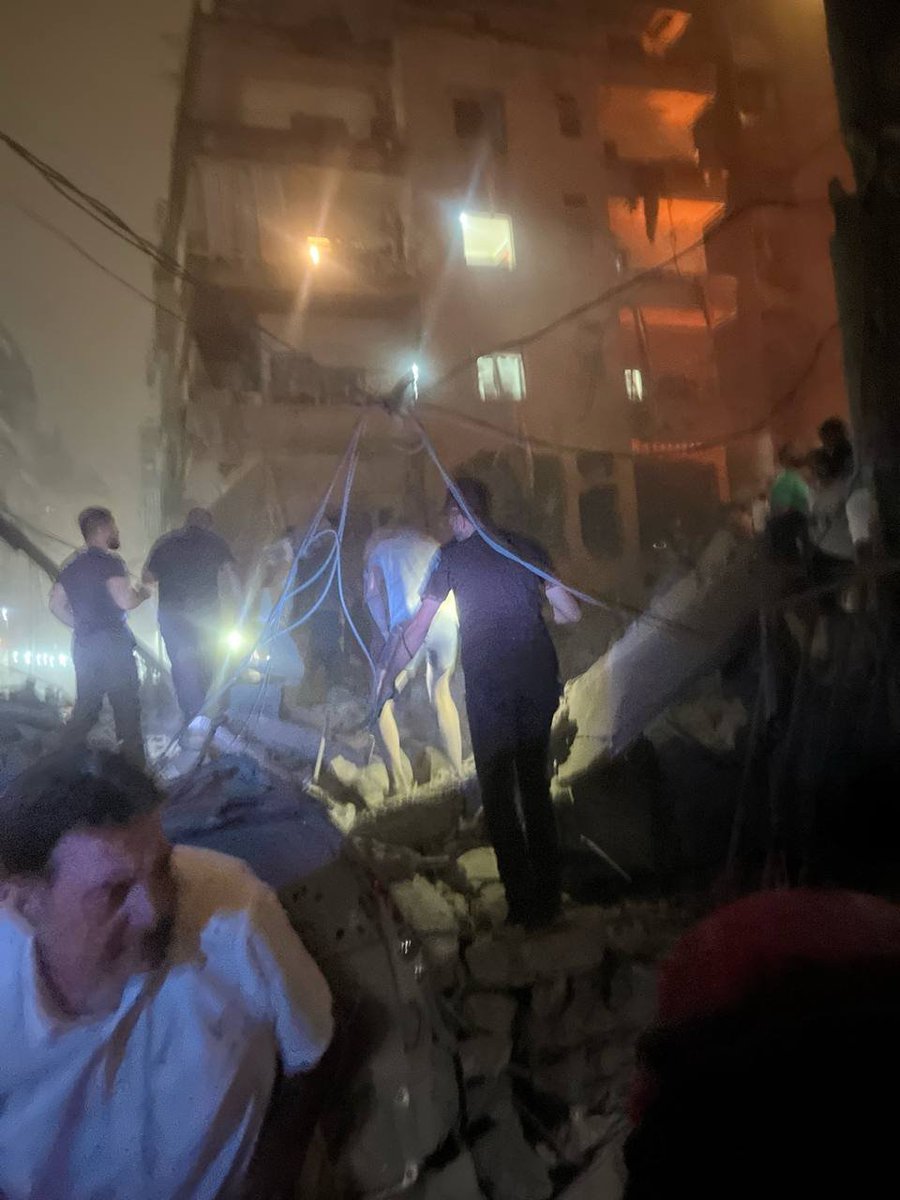
The bombed areas are mainly concentrated in southern Lebanon. According to MTV, the towns of Bint Jbeil, Nabatiyeh, Maroun al-Ras and the southern suburb of Beirut, Dahieh, were badly hit by the Israeli strikes. Israeli shelling targeted suspected military installations, but many civilian infrastructure, including schools and hospitals, were also hit. The strikes continued unabated throughout the night until dawn, causing massive destruction in the affected areas.
At around 2 a.m., according to Liveuamap, strikes also hit villages further north, particularly in the Bekaa region. Kfar Tibneet and Yuhmor Al-Shaqeef were hit by airstrikes, destroying several buildings and causing a mass exodus of civilians to safer areas. According to Annahar, shelling in these areas continued for several hours, worsening the humanitarian crisis in these already vulnerable areas.
In Beirut, the explosions rocked the southern suburbs of the city, known to be a Hezbollah stronghold. According to LBCI, Israeli airstrikes targeted several residential buildings in the Dahieh neighborhood, forcing many residents to evacuate their homes. Civilians are increasingly at risk as strikes intensify. Several hospitals in these areas are now out of service, leaving the wounded without adequate medical care.
3. Political situation
On the political front, diplomatic efforts to halt this escalation continue, although the prospects for a ceasefire remain uncertain. According to MTV and Annahar, Lebanese Prime Minister Najib Mikati has stepped up his calls for the international community to secure an immediate ceasefire. Talks are ongoing with international partners like the United States and France, while Qatar and Egypt are also playing a mediating role.
According to LBCI, Israel remains firm in its position, refusing to associate a ceasefire with the ongoing situation in Gaza, preferring to focus on the complete neutralization of Hezbollah in southern Lebanon. Israeli Defense Minister Yoav Gallant warned that the operation could continue until Hezbollah’s military infrastructure is totally destroyed. However, according to diplomats quoted by Naharnet, discussions on a temporary truce are ongoing, although the outcome of these negotiations remains uncertain.
On the international scene, calls for restraint are multiplying. The UN Security Council met in a special session to discuss the situation in Lebanon. According to Liveuamap, the Franco-American initiative for a 21-day ceasefire is currently under consideration, but it faces differences on the ground between regional actors. Iran, Hezbollah’s main backer, has reaffirmed its support for the group while calling for diplomatic talks to end hostilities.
4. Diplomatic situation
International diplomacy is in full swing as efforts multiply to try to defuse the situation. According to MTV and Liveuamap, the United States, in collaboration with France, is conducting negotiations to achieve a ceasefire. Antony Blinken, the US secretary of state, has begun a series of talks with Egyptian and Qatari officials to encourage de-escalation. However, positions remain fixed, with Israel insisting on the need to continue its military operations to ensure the security of its northern borders.
The UN, for its part, called for an immediate cessation of hostilities, stressing the seriousness of the ongoing humanitarian crisis. According to Annahar, more than 374,000 people have been displaced inside Lebanon since the Israeli strikes began. Discussions are also taking place around the implementation of Security Council Resolution 1701, which stipulates the deployment of the Lebanese army and UN forces in southern Lebanon to avoid an escalation.
Iran, according to LBCI and Al-Manar, continues to play a key role in this crisis, supporting Hezbollah while calling for talks to avoid a full-scale regional war. Qatar and Egypt are also involved in negotiations to stabilise the region, but progress has been limited.
5. Economic Developments
The Israeli bombings have paralyzed a large part of the Lebanese economy, already weakened by a protracted crisis. According to MTV and LBCI, several trade routes connecting Lebanon to Syria have been destroyed, making it difficult to deliver essential goods, including fuel and medicine. The southern region, severely affected by the strikes, is facing shortages of food and medical resources, while prices are rising due to the collapse of logistics infrastructure.
According to Annahar, the Central Bank of Lebanon had to intervene to stabilise the Lebanese pound, which continues to collapse in the face of rising tensions. International sanctions and the blockade of several trade routes have also worsened the situation. Fuel shortages, in particular, are crippling public services, including hospitals and schools. International organizations such as the Red Cross and the UN are trying to deliver humanitarian aid, but are facing difficulties in accessing the bombed areas.
6. Other developments
The humanitarian crisis in Lebanon continues to worsen, with thousands of civilians trapped in conflict zones. According to Liveuamap and LBCI, more than 374,000 people have been internally displaced, seeking refuge in safer areas or attempting to cross the Syrian border. The United Nations High Commissioner for Refugees (UNHCR) has called for emergency assistance to support these vulnerable populations, but access to the bombed areas remains limited.
Hospitals in the south are now overwhelmed. According to MTV, several health facilities were hit by Israeli strikes###1. Military situation and main fronts
Since 8 p.m. last night, clashes between Israel and Hezbollah have intensified. According to MTV, the Israeli army has stepped up strikes in southern Lebanon, targeting Hezbollah military infrastructure in Bint Jbeil, Maroun al-Ras and Nabatiyeh. Air raids and drones were deployed to destroy tunnels and weapons caches. According to Al-Manar, Hezbollah responded by launching rockets at Israeli bases, including the Ramat David military base, inflicting significant casualties.
Around 11 p.m., fighting intensified in the Marjaayoun region, with exchanges of artillery fire. According to Naharnet, more than 250 Hezbollah fighters have been killed this week in Israeli operations. According to LBCI, Israel continues to carry out ground incursions with the support of the air force, although Hezbollah forces are putting up fierce resistance.
2. Bombed areas
Israeli bombing intensified in southern Lebanon. According to Liveuamap, strikes targeted Bint Jbeil, Kfar Tibneet and Yuhmor Al-Shaqeef, destroying civilian and military infrastructure. MTV reports that the southern suburb of Beirut, Dahieh, was heavily hit by airstrikes, causing the evacuation of many civilians. Medical facilities were also affected, leaving many injured without treatment.
At 2 a.m., Israeli airstrikes continued to hit positions in the Bekaa, worsening the humanitarian crisis. According to Annahar, these massive bombings have caused mass exoduses of civilians.
3. Political situation
On the political front, Lebanese Prime Minister Najib Mikati has intensified diplomatic negotiations with France, the United States, Qatar and Egypt, according to Annahar. Israel, however, remains intransigent and refuses to associate ceasefire talks with the situation in Gaza. According to LBCI, Egypt is playing a key role in mediation, but talks have stalled.
Negotiations are also underway at the UN Security Council. According to Liveuamap, a 21-day truce is proposed by France and the United States, but it is met with reluctance due to the divergent objectives of the various stakeholders.
4. Diplomatic situation
Diplomatic efforts are at their peak as tensions rise. According to MTV, Antony Blinken has held a series of talks with Egypt and Qatar to de-escalate the situation. For its part, Iran, an ally of Hezbollah, said via Al-Manar that it would continue to support the group, while calling for an end to hostilities.
According to Naharnet, the UN has also been pushing for an immediate ceasefire, and a resolution is currently being discussed in the Security Council. The implementation of Resolution 1701, which stipulates the deployment of the Lebanese army in the south, is on the agenda, but escalation continues to hamper these efforts.
5. Economic Developments
The war is seriously affecting the Lebanese economy. According to LBCI, trade routes to Syria are cut off, exacerbating fuel and medicine shortages. Annahar reports that the Lebanese pound continues to lose value due to the war, leading to runaway inflation. The lack of fuel is crippling public services, including hospitals and schools, which are struggling to stay open.
According to MTV, international organizations, including the Red Cross, are trying to deliver humanitarian aid to the affected areas, but the bombing is making access difficult.
6. Other developments
The number of internally displaced people is increasing. According to Liveuamap, more than 374,000 people, mostly Syrian refugees, have fled north to escape the bombing. UNHCR is calling for urgent humanitarian assistance, but access to conflict areas remains difficult.
MTV also reports that several hospitals in the south have been forced to close due to the damage caused by the airstrikes, which is worsening the situation for the injured.