





The situation in and around Lebanon continues to deteriorate with intensified Israeli strikes, rocket fire in response, and mounting casualties. The exchange of fire between Israel and Hizbullah continues unabated, exacerbating the suffering of the civilian population. The escalation of the conflict, which has been going on for several months, is now at a decisive turning point, as diplomatic efforts struggle to impose a ceasefire. In this context, disinformation and claims of military victories on both sides make it even more difficult to accurately read the situation on the ground.
Latest military developments
Since this morning, Israeli strikes have targeted several positions in southern Lebanon, including key localities such as Bent Jbeil, Yanouh, and the Jabal Safi heights. Hizbullah responded by launching salvos of rockets at Israeli positions, particularly in the Upper Galilee area and the town of Mutla. Hezbollah defenders claim to have managed to inflict significant losses on the Israeli army, although the figures put forward by the two sides differ considerably.
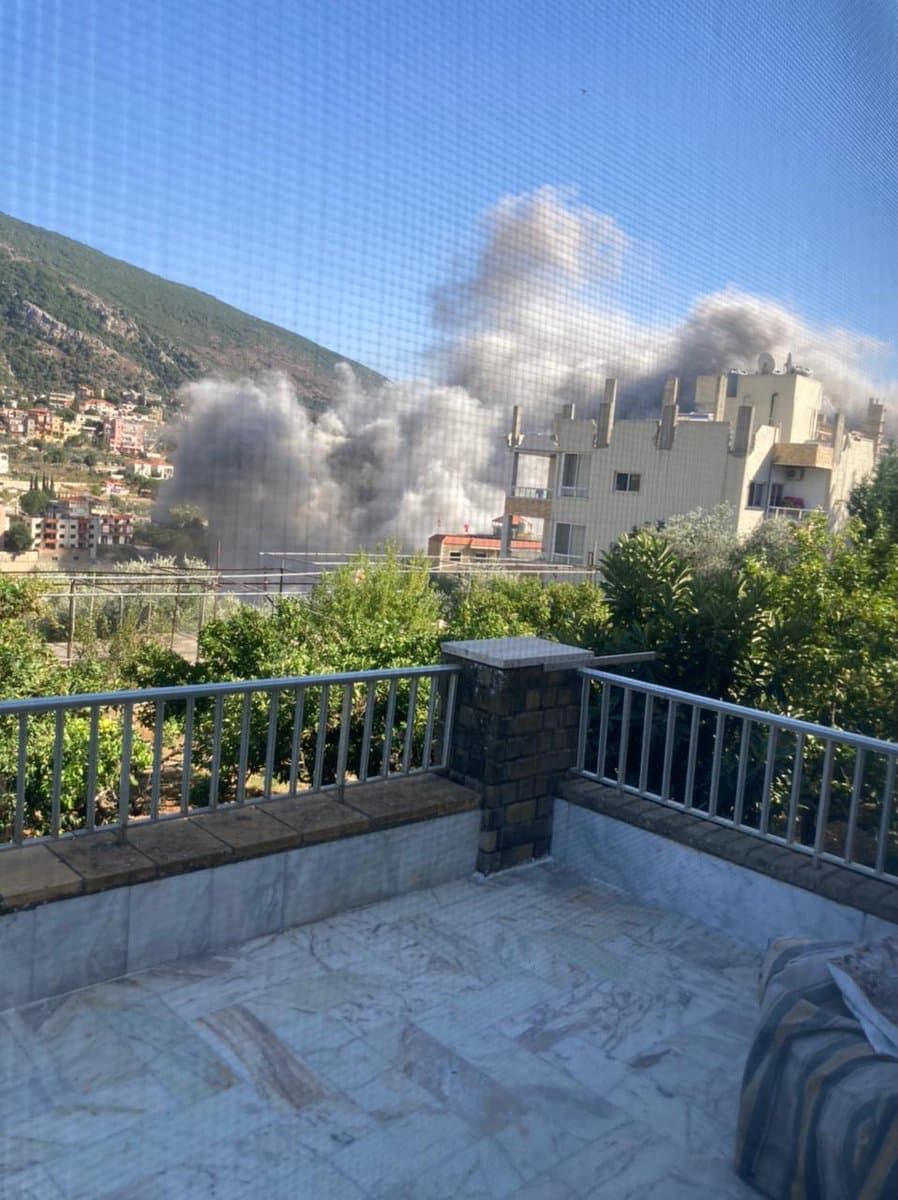
The Israeli army has also intensified its air raids on civilian and military areas. In particular, one strike targeted Jabal Safi in the Iqlim al-Tuffah area, a strategic mountainous area where Hezbollah forces are believed to be stationed. Other strikes targeted Hezbollah positions in Jebchit, Jouaya, and several nearby towns. These attacks have caused civilian casualties, including the death of five people in the village of Al-Khader when their homes were bombed.
Comparez rapidement les prix des vols avec Fly2Leb.
Hezbollah’s response
Hizbullah, for its part, has intensified its attacks on Israeli positions by launching rockets at several targets, including in the Upper Galilee. The organization claimed to have accurately struck gatherings of Israeli soldiers in Mutla, causing several casualties among the enemy forces. Hezbollah also uses drones to target strategic Israeli positions, a development that worries Israeli authorities, due to the accuracy of these attacks. In response, Israel claimed to have strengthened its air defenses in the north, intercepting several projectiles aimed at Haifa and surrounding communities.
The Maroun el Ras incident
The Israeli army recently released videos purporting to prove its control over Maroun el Ras, a strategic village on the border between Lebanon and Israel. The videos show an Israeli flag being raised in a garden in Maroun el Ras, a symbolic act meant to represent Israeli control of the community. However, fact-checking revealed that the footage was taken about 300 meters from the Blue Line, the internationally recognized border between Lebanon and Israel. The garden in question is a public park in the southern part of the village, which does not prove that Israeli forces control the entire community as they would have us believe.
This disinformation highlights the importance of the propaganda war that is being played out on both sides. For Israel, it is essential to demonstrate military advances, especially after weeks of intense clashes and significant casualties. For Hezbollah, it is crucial to deny any Israeli advance in order to maintain the morale of its fighters and supporters.
The situation in southern Lebanon
On the ground, the situation in southern Lebanon is extremely tense. Many localities are under fire from Israeli strikes, with massive destruction of infrastructure and increasing loss of life. The village of Jebchit, already hit by several strikes, was bombed again this afternoon, causing significant material damage. In the Jabal Safi area, clashes between Israeli forces and Hizbullah have intensified, while Israeli forces continue their operation to weaken Hizbullah’s positions in this strategic region.
Other villages such as Saksakieh, Jouaya, and Bent Jbeil are also under Israeli bombardment, worsening the humanitarian situation for civilians trapped in these areas. The Israeli strikes target not only military positions, but also crucial civilian infrastructure, such as roads and irrigation systems. For example, an airstrike targeted the main irrigation canal connecting the waters of the Litani River to agricultural areas, severely disrupting water supplies in southern Lebanon.
IDF response and casualties
The IDF responded to Hezbollah’s attacks with intensive airstrikes, targeting perceived military positions and infrastructure used by the organization. However, the reality on the ground shows that these strikes are also causing significant civilian casualties. Israeli strikes killed five people in the town of Al-Khader, located in the Baalbek region, and several other civilians were wounded in other localities in southern Lebanon.
Israel claims that Hezbollah is suffering considerable losses. According to Israeli officials, about 300 Hezbollah fighters have been killed since the start of the military offensive in southern Lebanon. These figures are difficult to verify independently, however, as they are based on reports from the Israeli army, which is directly involved in the fighting.
For its part, Hezbollah claimed the death of several Israeli soldiers during the clashes on the border. These claims cannot be independently verified, but they are part of Hezbollah’s strategy to maintain a media balance in the face of Israeli military superiority.
Sheikh Naim Qassem’s Statements
In a speech this morning, Hezbollah’s deputy secretary-general, Sheikh Naim Qassem, reaffirmed his organization’s determination to continue the fight against Israel. He stressed that the ongoing war had not affected Hizbullah’s willingness to resist and that its military capabilities remained intact. Qassem also mentioned that the Israeli attacks, although destructive, had not reached the organization’s strategic capabilities. He claimed that Hezbollah would continue to strike Israeli targets according to its military strategy, without bowing to international pressure.
Sheikh Qassem also stressed that the current conflict is not simply a battle between Israel and Hezbollah, but is part of a broader struggle for the liberation of Palestine. He said Iran, Hezbollah and other regional resistance forces are playing a crucial role in supporting the Palestinians, while insisting that the Palestinian people are at the heart of this struggle.
International reactions and diplomacy
Diplomatic efforts to secure a ceasefire continue, but with few concrete results. The UN and UNIFIL urged both sides to abide by Security Council Regulation 1701 , which calls for a ceasefire and the peaceful resolution of the conflict between Lebanon and Israel. However, hostilities continue, making the implementation of this resolution increasingly difficult.
On the side of Hezbollah’s allies, Iran continues to strongly support the resistance, while calling for caution. Iran’s foreign minister reaffirmed his country’s support for the resistance, while insisting that Iran does not seek to provoke an all-out war. Iraq and Yemen, two other regional resistance actors, have also stepped up their support for the Palestinians and Hezbollah.
Israel, for its part, continues to enjoy strong support from the United States and several Western countries. However, recent reports indicate that the White House is increasingly suspicious of information provided by Israel about its military operations and diplomatic objectives. This growing distrust could further complicate diplomatic efforts to end the conflict.