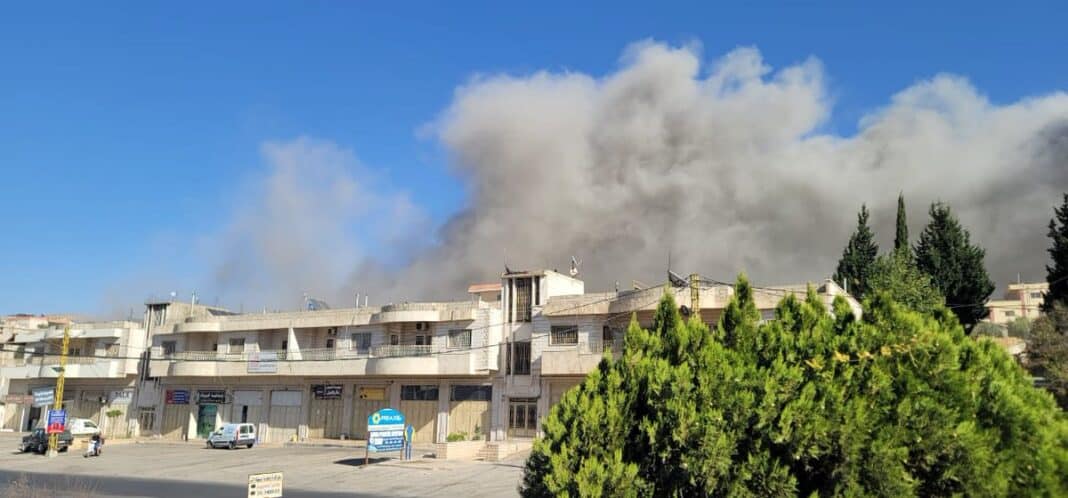






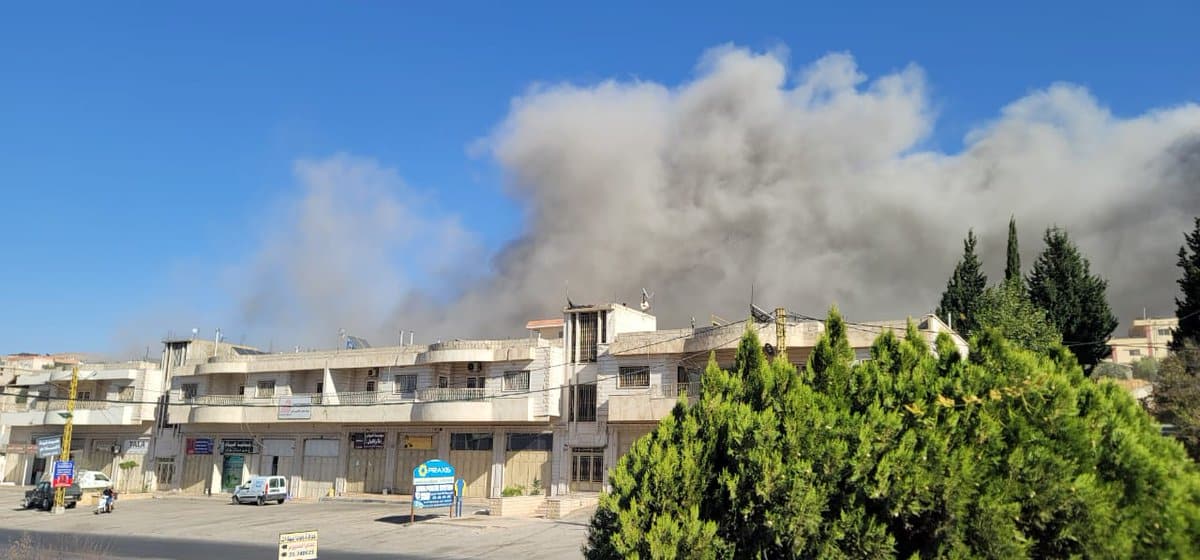
The situation in Lebanon remains extremely volatile due to the escalation of tensions between Hezbollah and Israel. The conflict, which erupted against the backdrop of a wider regional war, sees southern Lebanon, particularly the border regions, become a theatre of intense violence. Israeli airstrikes have repeatedly hit strategic targets in southern Lebanese towns, such as Nabatieh, Maroun al-Ras, and Bint Jbeil, causing massive destruction and causing dozens of civilian casualties.
Regional Context and Tensions
Since the beginning of October 2024, southern Lebanon has been plunged into a continuous cycle of violence. Tensions between Hezbollah and Israel, exacerbated by cross-border attacks, have led to Israeli strikes on Hezbollah positions and civilian infrastructure. Hezbollah, for its part, retaliates with massive rocket fire into Israel, targeting cities such as Kiryat Shmona and Nahariya.
Israel, using its air force, drones and artillery, has struck civilian and military targets throughout southern Lebanon, reaching the southern suburbs of Beirut, a Hezbollah stronghold. The strikes targeted residential buildings, hospitals and critical infrastructure, such as main roads and supply lines. Among the notable targets, the alleged Hezbollah command center in Dahiyeh, in the southern suburbs of Beirut, was heavily bombed.
Suivez les principaux indicateurs économiques en temps réel.
The Role of Iran and the Allies
Iran plays a key role in supporting Hezbollah, underscoring its strategic alignment with Lebanon against Israel. Abbas Araghchi, Iran’s foreign minister, reaffirmed Tehran’s unwavering support for the « Islamic Resistance » during his visit to Beirut, while denouncing the Israeli strikes as flagrant violations of the rights of the Lebanese. He also announced a diplomatic campaign to demand an immediate ceasefire, while warning that any Israeli act against Iranian interests would result in proportionate retaliation.
Iran’s Supreme Leader Ayatollah Ali Khamenei also delivered a speech at Friday prayers in Tehran, calling the attacks by Hezbollah and Hamas a « legitimate defense » against the Israeli occupation. Khamenei called for greater unity between the resistance movements in Palestine and Lebanon, stressing that attacks on Israel « are legal under international law. »
Hezbollah and the Retaliation
Hizbullah continues to bombard Israeli positions, including with rocket fire and heavy missile strikes. Volleys of rockets were fired at Israeli settlements, causing extensive material damage. According to Israeli media, more than 100 rockets were launched from Lebanon in a single day, hitting several communities in northern Israel. Hezbollah has also claimed responsibility for attacks on Israeli vehicles and military positions, such as in Sa’sa where a « Burkan » missile targeted a gathering of Israeli soldiers.
The intensity of the bombing also paralyzed several regions of Lebanon. In Nabatieh and Baalbek, Israeli strikes damaged civilian infrastructure, cutting off access to roads and knocking hospitals out of service. Several paramedics were killed in strikes on a medical centre in the south, worsening an already catastrophic humanitarian situation.
Humanitarian situation
Lebanon is facing a growing humanitarian crisis. Thousands of civilians have been internally displaced, seeking refuge in makeshift shelters. The number of displaced people has exceeded 13,000 in northern Lebanon, while hospital capacity, already severely weakened by the economic crisis and the shortage of medicines, is overwhelmed by the influx of wounded.
Basic infrastructure is severely damaged, and several hospitals in southern Lebanon have stopped functioning. The situation is particularly critical at Tebnin hospital and several health centres in the Marjayoun area, where Israeli strikes have directly hit medical facilities.
Access to humanitarian aid has become almost impossible in some areas. The Lebanese government, under pressure from international forces, has tried to establish humanitarian corridors to allow the evacuation of the wounded and the delivery of aid. However, constant Israeli bombardment makes these efforts extremely difficult.
Diplomacy and Peace Efforts
On the diplomatic front, several international powers, including Iran and France, have stepped up their efforts to broker a ceasefire. Lebanese Prime Minister Najib Mikati has increased contacts with his international counterparts, calling for an immediate cessation of hostilities and the full implementation of UN Security Council Resolution 1701. The resolution, adopted in 2006 after the war between Israel and Hezbollah, calls for the withdrawal of Israeli forces from southern Lebanon and the creation of a demilitarized zone under UNIFIL’s supervision.
However, the prospects for peace seem remote, as Israel continues to conduct military operations to destroy Hezbollah’s infrastructure in southern Lebanon. The Israeli army recently announced that it had struck more than 2,000 targets linked to Hezbollah since the beginning of its ground offensive. According to Israeli Defense Minister Yoav Galant, Israel is determined to continue its operations until the total elimination of the Hezbollah threat on its northern border.