





The geopolitical context in the Middle East continues to become more complex, especially with the intensification of military exchanges between Israel and its regional adversaries, notably Iran.
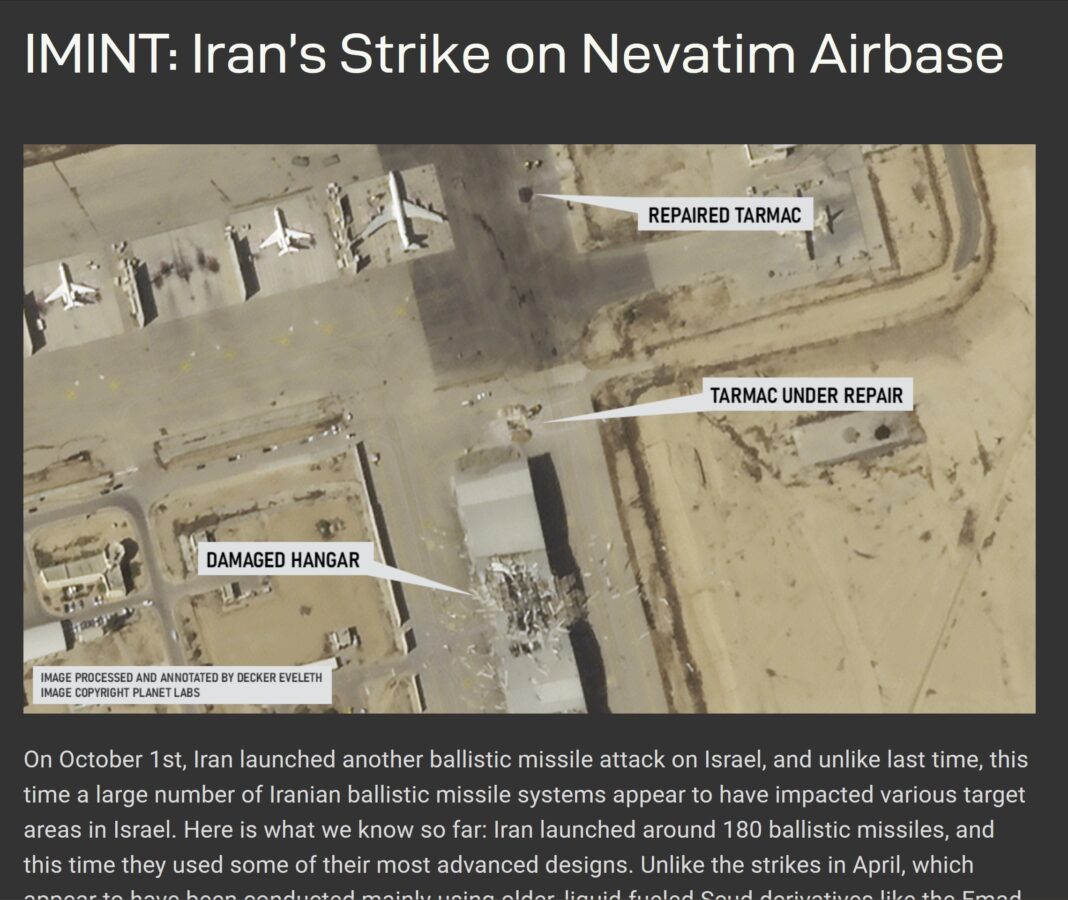
While Israel’s defenses for Tel Aviv or other civilian areas appeared to have worked well enough and prevented the missiles from severely damaging civilian infrastructure, another attack that hit the Nevatim base in Israel revealed Iran’s growing ability to saturate Israel’s air defenses, which are reputed to be among the most sophisticated in the world.
It was not a question of hitting the base itself or damaging the planes that are under bunkers, but rather of sending a message.
Comparez rapidement les prix des vols avec Fly2Leb.
This event, which saw missiles bypass Israel’s defensive shield, sparked growing concerns not only for the immediate security of strategic installations, but more importantly for what it represents as a political message. According to military experts, the attack was not simply intended to test Israel’s defenses, but to send a far more consequential signal: the Dimona nuclear power plant, located as Israel’s primary air base in the defense of the Jewish state. This is a symbol of Israel’s nuclear potential, and could be a potential target in the event of Israeli retaliation over Iran’s nuclear program.
Indeed, this show of force is part of a strategy of mutual deterrence. The message sent by Tehran seems clear: « tooth for tooth, eye for eye ». If Iran’s nuclear facilities were to be targeted in an open conflict, Israeli nuclear facilities would no longer be out of reach. Dimona, located in the Negev desert like this Nevatim base, embodies the heart of Israel’s nuclear program and, as such, is becoming a critical strategic issue for the balance of power in the region.
A new paradigm of nuclear deterrence?
The attack on the Nevatim base is not only an attack on Israel’s military capabilities, but also redefines the contours of the conflict between the two regional powers. By proving its ability to circumvent Israel’s missile shield, Iran is demonstrating a technological build-up and strategic resolve that extends beyond conventional confrontations. The underlying threat is clear: if Israel continues to strike Iranian targets, the repercussions could render Israel uninhabitable.
This profoundly changes the deterrence dynamic between the two countries. While previous confrontations relied on targeted strikes and limited retaliation, this new phase introduces the possibility of retaliation against critical infrastructure like Dimona, raising the level of risk to that of a nuclear conflict. In this power game, Iran seems to be warning that it is prepared to respond proportionately to any attack on its sensitive facilities.
Towards a spiral of mutual destruction?
Regional observers note that an attack on Dimona would have catastrophic consequences for Israel, not only humanly but also ecologically. Such a scenario would literally turn parts of the country into uninhabitable zones, creating an existential threat to the Jewish state. Moreover, such a conflict could quickly spread to the entire Middle East, with global repercussions.
The dilemma facing Israel now is how to maintain credible deterrence while avoiding crossing the red line that could lead to retaliation of this magnitude. For now, pressure is mounting on both sides, while the shadow of a nuclear conflict, while still averted, is becoming more and more palpable.
In conclusion, as Iran continues to challenge Israel on several fronts, including air defenses, the specter of a nuclear confrontation looms dangerously. The latest military actions send an unequivocal message that if Israel continues to target Iran’s nuclear facilities, its own strategic infrastructure, including Dimona, could become targets.
China and the United States oppose escalation over oil
Faced with this rise in tensions, several world powers have expressed their concerns, including China and the United States. Beijing, which considers Iran’s oil facilities to be one of its vital economic interests, firmly opposes any attack on them. China is heavily dependent on Iranian oil to fuel its economy and perceives any destabilization of this resource as a direct threat to its energy security. Any attack on these facilities could lead to a disruption in supplies, creating a shock to global oil markets.
For his part, US President Joe Biden is also opposed to an escalation that could affect Iran’s oil facilities. As he nears the end of his term, Biden is seeking to avoid another major conflict in the Middle East, especially since a spike in oil prices would be extremely unpopular with American voters. A rise in energy prices could weigh heavily on the US economy and jeopardise its efforts to maintain the stability of domestic markets during this election period.