





1. Local news: Israeli bombing of Beirut and mounting casualties
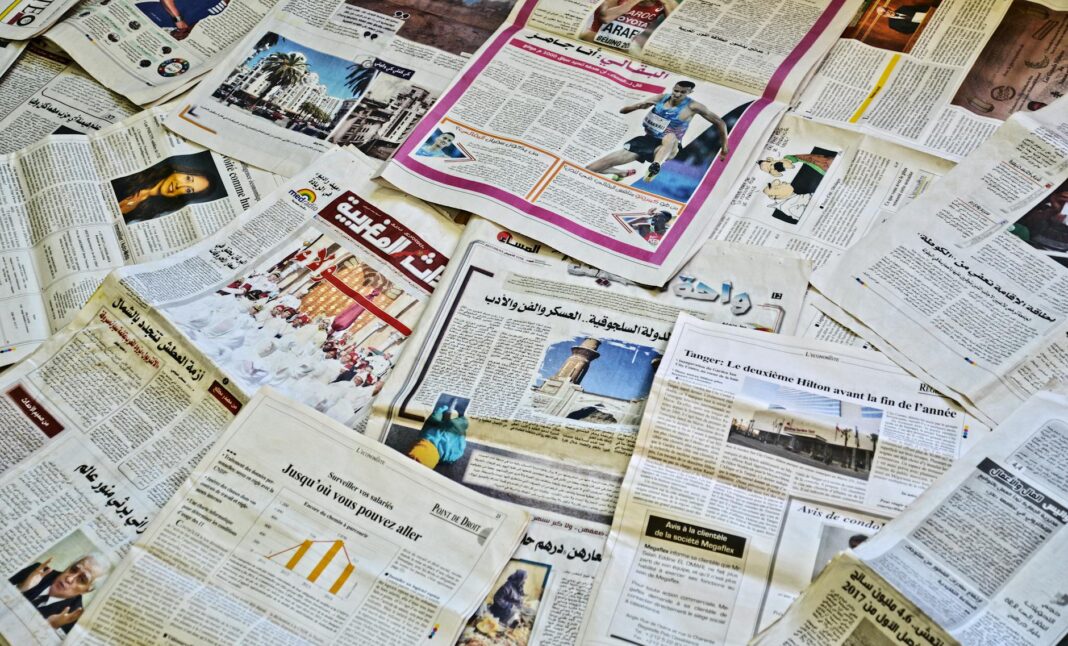
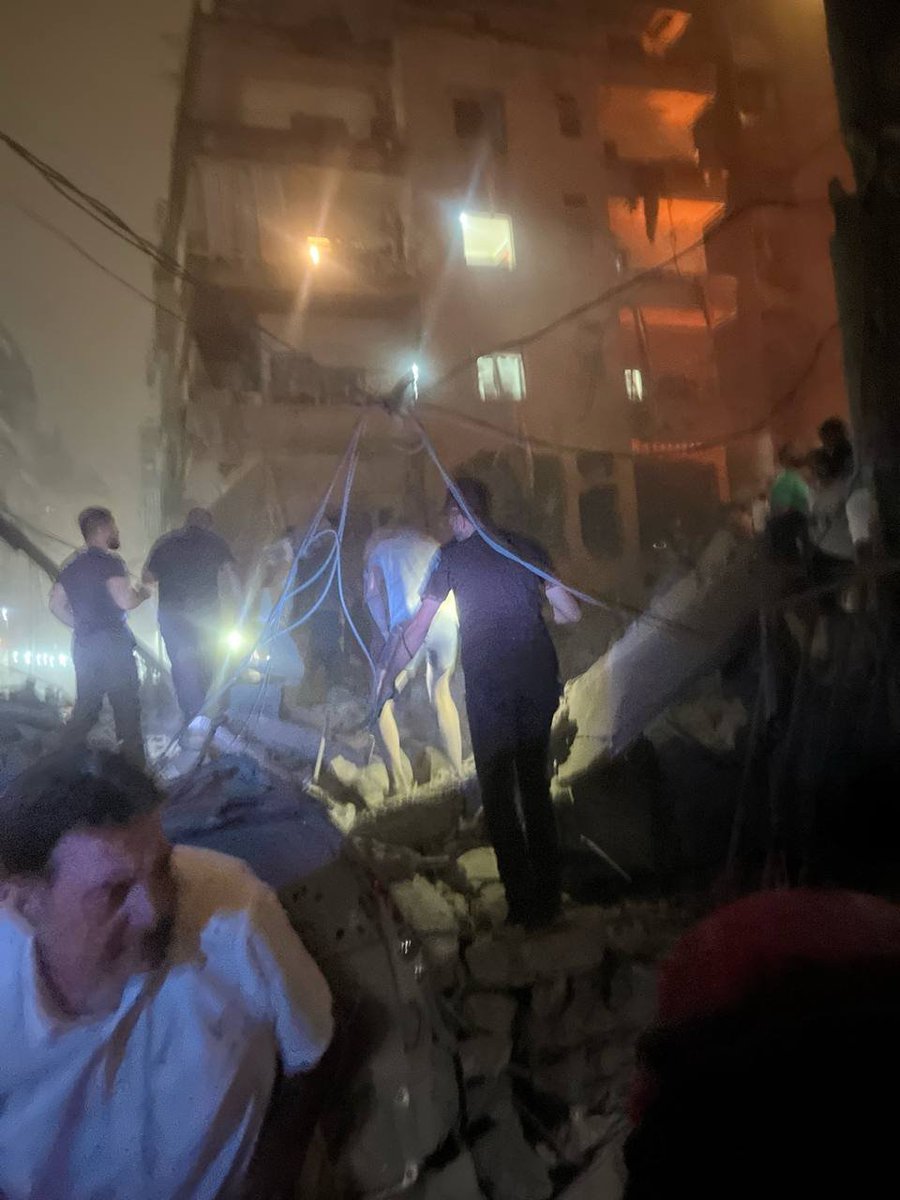
According to the daily An-Nahar, the Lebanese capital suffered two Israeli airstrikes that targeted densely populated residential areas, including Nueiri and Basta. These bombings led to the collapse of several buildings. Lebanon’s Ministry of Public Health issued a gruesome toll of 22 dead and 117 injured. Emergency services were immediately dispatched to the scene to search the rubble, while residents desperately tried to leave the affected areas with their personal belongings.
The strikes have caused a real climate of terror among the population, especially in Beirut, which had not seen such intense bombing for years. According to eyewitnesses quoted by Asharq Al-Awsat, families were forced to evacuate in the middle of the night, hurriedly carrying their belongings under the deafening sounds of explosions and ambulance sirens. The daily points out that these strikes are part of an Israeli escalation that began on September 23, 2024, marked by repeated attacks on Lebanese civilian and military areas.
The Al Joumhouria newspaper said the Israeli strikes targeted Wafic Safa, a senior Hezbollah official in charge of the liaison and coordination unit. The failed assassination attempt underscores the intensification of Israeli efforts to neutralize Hezbollah’s senior cadres. However, three security sources, quoted by Reuters, confirmed that Safa survived the attack. According to the same sources, Israel carries out near-daily strikes on Hezbollah-linked targets in the southern suburbs of Beirut, but these strikes rarely hit the heart of the Lebanese capital.
Suivez les principaux indicateurs économiques en temps réel.
These attacks also targeted other influential Hezbollah figures. According to Al Joumhouria, an earlier Israeli strike on September 30 targeted members of the Popular Front for the Liberation of Palestine (PFLP) near Beirut airport, killing four people, including three PFLP activists. Another strike on 2 October hit a Hezbollah health unit centre in the Bachoura neighbourhood, killing seven people. These repeated strikes on Beirut, particularly on civilian neighbourhoods, show a blatant disregard for civilian lives and critical infrastructure.
2. Regional news: Intensification of fighting in southern Lebanon
Fighting between Israeli forces and Hezbollah has also intensified in southern Lebanon. According to Al Anbaa, the Israeli airstrikes targeted several Hizbullah positions, including in the areas of Ras Naqoura, Mays al-Jabal and the border region with Israel. Israeli shelling has caused significant civilian casualties, and hundreds of people have been displaced as a result of the strikes.
According to Al Joumhouria, the bombings are a response to Hezbollah’s rocket fire on Israeli settlements in the north. Hezbollah has claimed responsibility for several attacks on Israeli forces, including the destruction of Merkava tanks near Ras Naqoura. These actions show that, despite Israeli firepower, Hezbollah continues to resist with effective military tactics. Hizbullah’s resistance to the Israeli offensive has also intensified in other border towns.
The daily Al Joumhouria reports that although Israeli forces are trying to penetrate deeper into Lebanese territory, they are encountering fierce resistance. Several Israeli attempts to infiltrate Ras Naqoura and Mays al-Jabal were repelled by Hezbollah, which used anti-tank missiles to destroy several Israeli armored vehicles.
Israeli strikes in the Bekaa region also caused heavy casualties. An-Nahar reports that civilian infrastructure, including schools and hospitals, were severely damaged in these attacks. Hizbullah responded with rocket fire at several Israeli bases in the north, including the areas of Kiryat Shmona and other settlements. Israel has stepped up its strikes in response, bombing civilian and military infrastructure in southern Lebanon.
The Asharq Al-Awsat newspaper adds that the humanitarian situation in southern Lebanon is particularly alarming. Many localities are cut off from the rest of the country due to the destruction caused by the bombings. The main roads linking Beirut to the south are frequently targeted by Israeli strikes, making it difficult to deliver humanitarian aid. Residents of border areas have been forced to flee their homes, seeking refuge in schools and community centres, where living conditions are precarious.
3. International news: Diplomatic rejection of Israeli escalation and international mobilization
On the international scene, calls for a ceasefire are multiplying, but they are struggling to materialize. According to Al Joumhouria, diplomatic efforts to secure a cessation of hostilities have been blocked by differences between the major powers in the UN Security Council. The United States continues to support Israel, while France and other European countries call for an immediate cessation of hostilities. France, in particular, has intensified its efforts to organize an international conference on Lebanon, scheduled to take place in Paris on October 24, 2024. The aim of this conference is to mobilise resources to help rebuild and stabilise the country, but expectations are low due to the deep divisions between the participating countries.
Al Anbaa also reports that the UN Security Council discussed the situation in Lebanon and the Gaza Strip, but no significant progress was made in imposing a ceasefire. The United States reaffirmed its support for Israel, while Russia and China criticized Israel’s escalation and called for immediate dialogue. The daily stresses that the lack of international consensus risks prolonging the conflict, especially with Israeli attacks continuing to target civilians and critical infrastructure in Lebanon.
The Israeli attack on the United Nations Interim Force in Lebanon (UNIFIL) has sent shockwaves through Europe. According to Al Akhbar, two Italian soldiers were wounded in an attack on a surveillance post in Ras Naqoura. Italian Defense Minister Guido Crosetto called the attack a « war crime » and summoned the Israeli ambassador in Rome to demand an explanation. France also expressed outrage at the attack and called for an emergency meeting of UNIFIL contributing countries to discuss ways to protect peacekeepers.
According to An-Nahar, the attack on UNIFIL is likely to further complicate the situation in Lebanon. UNIFIL’s mission to keep the peace and monitor Lebanon’s southern border is caught between the fighting. Worsening violence could force contributing countries to reconsider their participation in the mission, further weakening stability in the region.
In a statement, the National News Agency (NNA) reported that Lebanese Prime Minister Najib Mikati has increased diplomatic contacts with France, the United States and other international partners to try to achieve a ceasefire. He reaffirmed Lebanon’s willingness to abide by UN Security Council Resolution 1701, provided that Israel does the same. However, these efforts seem to be in vain in the face of Israel’s willingness to continue its military offensive.