





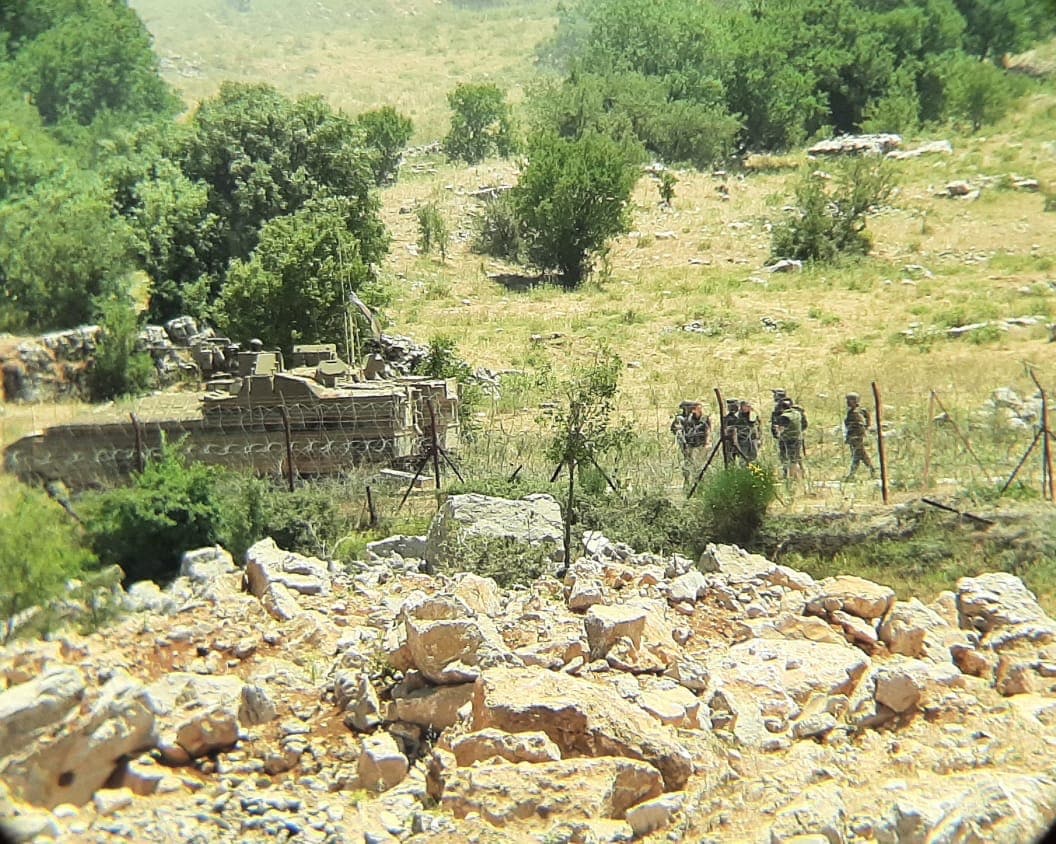
The day began with violent Israeli strikes on several localities in southern Lebanon. At 12:01 p.m., the Lebanese Islamic resistance, through Hezbollah, launched a salvo of rockets at the Beit Lid military base, east of Netanya. According to Al-Manar and MTV, the attack marks a turning point in the expansion of Hezbollah’s strikes against Israeli strategic targets deep in Israeli territory. In response, the Israeli army intensified its strikes on Lebanese villages near the border, including Kafr Tebnit, Al-Numayriyeh, and the towns of Sal’a and Al-Shahabiyyah. The shelling, which began early in the morning, destroyed several homes in these residential areas.
Israeli forces also targeted the outskirts of the town of Shebaa with incendiary shells. This attack not only caused material damage, but also increased the pressure on civilians residing in these areas, who are now living under heavy fire. In addition, the Israeli army carried out strikes on the town of Nabatieh al-Fawqa, causing further injuries.
According to Liveuamap, an Israeli raid also hit the town of Maarrab, injuring four people. These attacks are part of an Israeli strategy to weaken Hezbollah’s military capabilities while inflicting significant civilian casualties. Other strikes hit Yuhmor Al-Shaqif, where an Israeli strike targeted a medical center of the « Health Islamic Association », causing several deaths.
Comparez rapidement les prix des vols avec Fly2Leb.
Infiltration attempts and counterattacks
At the same time, Hizbullah continued to conduct defensive operations against Israeli forces. At 11:37 a.m., the movement claimed to have repelled an Israeli infiltration attempt in Aita Al-Shaab, near the southern border. The attack was stopped by artillery fire, forcing Israeli troops to retreat under heavy fire. Hezbollah also claimed responsibility for missile strikes against an Israeli military base in the Haifa area, where at least 10 rockets were fired. Sirens sounded in several Israeli cities, including Netanya and Haifa, sowing panic among the population.
The intensity of the clashes is also manifested in ground attacks. At 4 a.m., Israeli special forces tried to infiltrate from the town of Markaba, but were repelled by Hezbollah with artillery fire. This unsuccessful attempt reflects the complexity of the theater of operations along the Lebanese-Israeli border, where fighting is concentrated around strategic points.
2) Information on the bombings:
Bombing of southern Lebanon
Israeli bombing has continued to intensify in several localities in southern Lebanon, causing significant material damage and loss of life. According to Liveuamap and MTV, the outskirts of Deir Aamess were hit by two air raids at 12:13 p.m., causing major destruction in this residential area. The strikes followed similar attacks on the town of Kafr Tebnit, where a shopping mall was destroyed by an Israeli strike earlier in the morning.
Shelling also targeted the town of Ma’arrab, wounding four people, while another strike hit the Siddiqin medical center, killing one civilian and wounding another. In the Nabatieh region, the towns of Kafr Rumman and Al-Khuraib were also targeted by Israeli airstrikes, causing the destruction of several civilian infrastructures.
Attacks on the Gaza Strip
At the same time, the Gaza Strip continues to suffer violent Israeli strikes. In Jabalia, an Israeli attack hit a refugee camp, killing at least 20 people and injuring several others. According to Liveuamap, the attack targeted the Al-Mufti school, where displaced families had taken refuge. Hospitals in the region are overwhelmed by the number of wounded, and medical facilities are frequently targeted by Israeli strikes, exacerbating the ongoing humanitarian crisis.
3) Local political initiatives:
Efforts to respond to internal displacement
Faced with this escalation of hostilities, the Lebanese authorities are trying to manage the worsening humanitarian crisis. The president of the South Lebanese Council, Nabih Berri, received a call from the Qatari prime minister to discuss diplomatic efforts to end hostilities. The discussion echoes growing concerns among Lebanese officials about the massive displacement of civilians in the south of the country. Local authorities have launched initiatives to deliver food and medicine to the worst-affected areas, including the Bekaa and southern Lebanon.
A shipment of humanitarian aid from Saudi Arabia has arrived in Beirut, carrying 30 tons of medical and food supplies. At the same time, Turkey has also sent 300 tons of humanitarian aid to support the populations affected by the conflict. These initiatives are vital, as Israeli shelling has crippled infrastructure in several parts of Lebanon, preventing access to essential services such as health care and water supply.
Iranian retaliation
Iran has stepped up its support for Hezbollah, with firm statements that « Hezbollah’s war machine is in motion. » An Iranian official warned that the coming days would be « difficult for Israel, » hinting at a potential escalation of Hezbollah’s military operations. Tehran also reiterated its support for Hezbollah after the assassination of its military commander Ali Nilforoushan by Israeli forces, warning that it would hold Israel responsible for the repercussions of the act.
4) Diplomatic initiatives:
Calls for a ceasefire
On the diplomatic front, calls for a ceasefire are multiplying, but are struggling to find an echo among stakeholders. Josep Borrell, the European Union’s High Representative for Foreign Affairs, has once again called for an immediate end to hostilities, warning of the repercussions of a prolonged war. He particularly criticized the Israeli strikes targeting UNIFIL (United Nations Interim Forces in Lebanon) positions, calling them unacceptable.
On the United Nations side, concern is growing about the humanitarian crisis in Lebanon and Gaza. According to a UN spokesman, Israeli attacks on civilian infrastructure and refugee camps risk further worsening the situation of displaced populations, creating a « mass displacement crisis » if the bombing continues.
5) Miscellaneous information:
The humanitarian crisis in Lebanon and Gaza
The humanitarian situation in Lebanon and Gaza is alarming. According to reports, hospitals in southern Lebanon are overwhelmed, and rescue services are struggling to access areas affected by Israeli strikes. In Siddiqin, a medical center was directly targeted by a strike, killing one civilian and wounding another. In Gaza, the situation is even more serious, with regular strikes on refugee camps, hospitals and schools. Medical infrastructure, already fragile, is unable to cope with the massive flow of wounded, exacerbating the humanitarian crisis in the region.
Another crucial aspect of this crisis is the plight of displaced civilians. Thousands of families have fled conflict zones, taking refuge in makeshift temporary shelters in schools, mosques and community centres. In Jabalia, an attack hit a refugee camp, killing at least 20 people and injuring several others. These strikes on civilian targets are fuelling panic among local populations, who fear for their safety.